

Driven by Industry 4.0 and intelligent manufacturing, drones have become "air pioneers" in inspection, security, and rescue operations, improving efficiency, reducing costs, and enabling rapid response. However, battery life and charging safety and efficiency are key challenges in drone development. How to safely and efficiently charge drones unattended remains a critical issue.
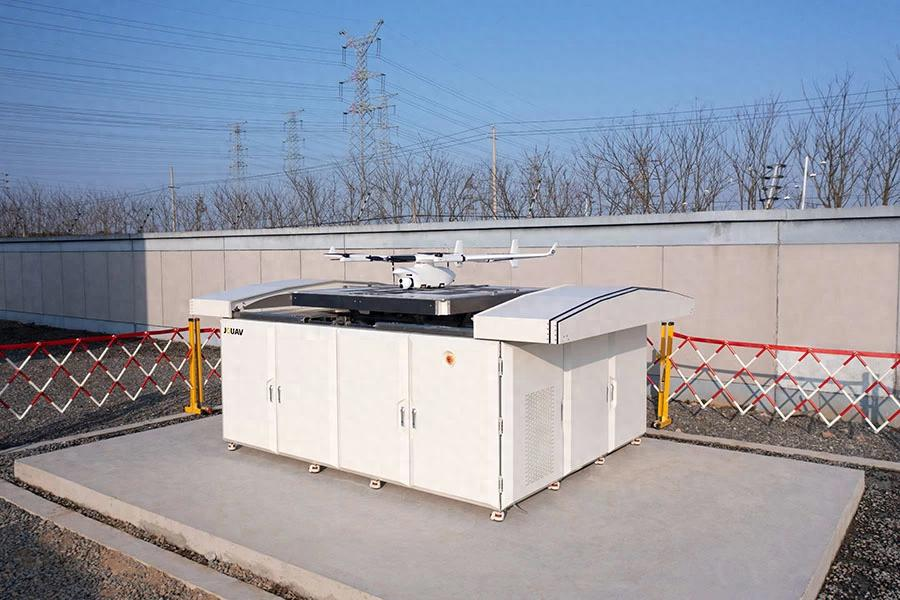
Industry Pain Points
Short drone battery life and frequent charging affect efficiency; manual charging increases costs; complex industrial environments such as high temperatures, high humidity, and dust; frequent safety issues such as poor charging port contact, overcharging, and over-discharging.
Charging Port Connection Solution
Using CMW modular connectors to achieve unattended automatic charging. The receiver is installed on the bottom of the drone, and the ITA is installed in the cabin. Signals and charging are automatically transmitted, enabling fully automated operation that is efficient and safe. The advantages of this solution are as follows:
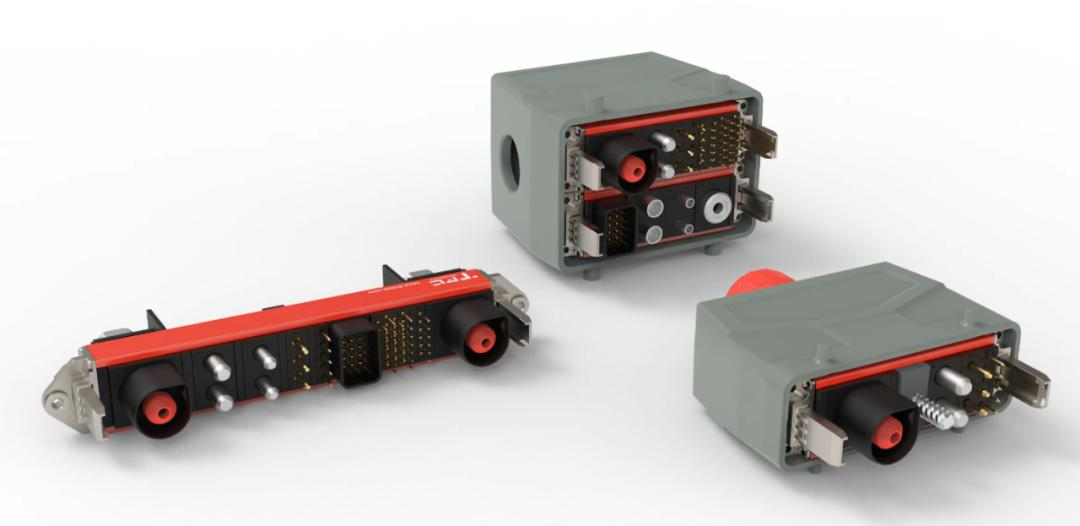
1. Small Size and Light Weight: The width is less than 35mm, and the length can be controlled within 18mm, reducing power consumption and improving battery life.
2. Modular Design, Flexible Adaptability: Supports various drone models and types; customizable configuration according to needs.
3. Diverse Forms: Automatic/manual docking, supports fast charging, and shortens downtime.
4. Large Tolerance Design: Tolerance of 5mm, automatic calibration docking charging, no manual intervention required, reducing the impact of wind and other external factors on the drone during landing, correcting potential errors.
5. Multi-functional Signal Integration: Compatible with signals, power, coaxial, fiber optic, pneumatic, etc., within a compact framework.
6. High Protection Level: Waterproof and dustproof, the protection level of the open-hole installation reaches IP67, suitable for industrial scenarios.
7. Easy Operation: Modules have numbers and foolproof markings for easy operation.
Application Scenarios
Industrial Inspection: Oil pipelines, power lines, river pipelines, etc., drones automatically return to base for charging and continuous monitoring.
Disaster Relief: Such as forest fire prevention, long-distance operations replacing manual work, and rapid response.
Security Monitoring: In industrial parks, border patrols, etc., drones can charge autonomously.
Agricultural Plant Protection: Spraying farmland, monitoring pests and diseases, automatic charging to expand the operating range.
