

Optical Module Testing in the 800G and 1.6T Era: Why ICT/FCT Fixture Design Matters More Than Ever
The Hidden Challenge Behind High-Speed Optical Modules
As data centers rapidly evolve toward 800G and even 1.6T network architectures, the demand for higher bandwidth, lower latency, and greater reliability continues to grow.
At the heart of this transformation are optical modules. These critical devices serve as the communication backbone connecting switches, servers, AI clusters, and cloud infrastructure. Any failure in an optical module can directly impact network performance and system stability.
While significant attention is often given to PCB design, signal integrity simulation, and thermal management, another crucial factor is frequently overlooked: Optical Module Testing.
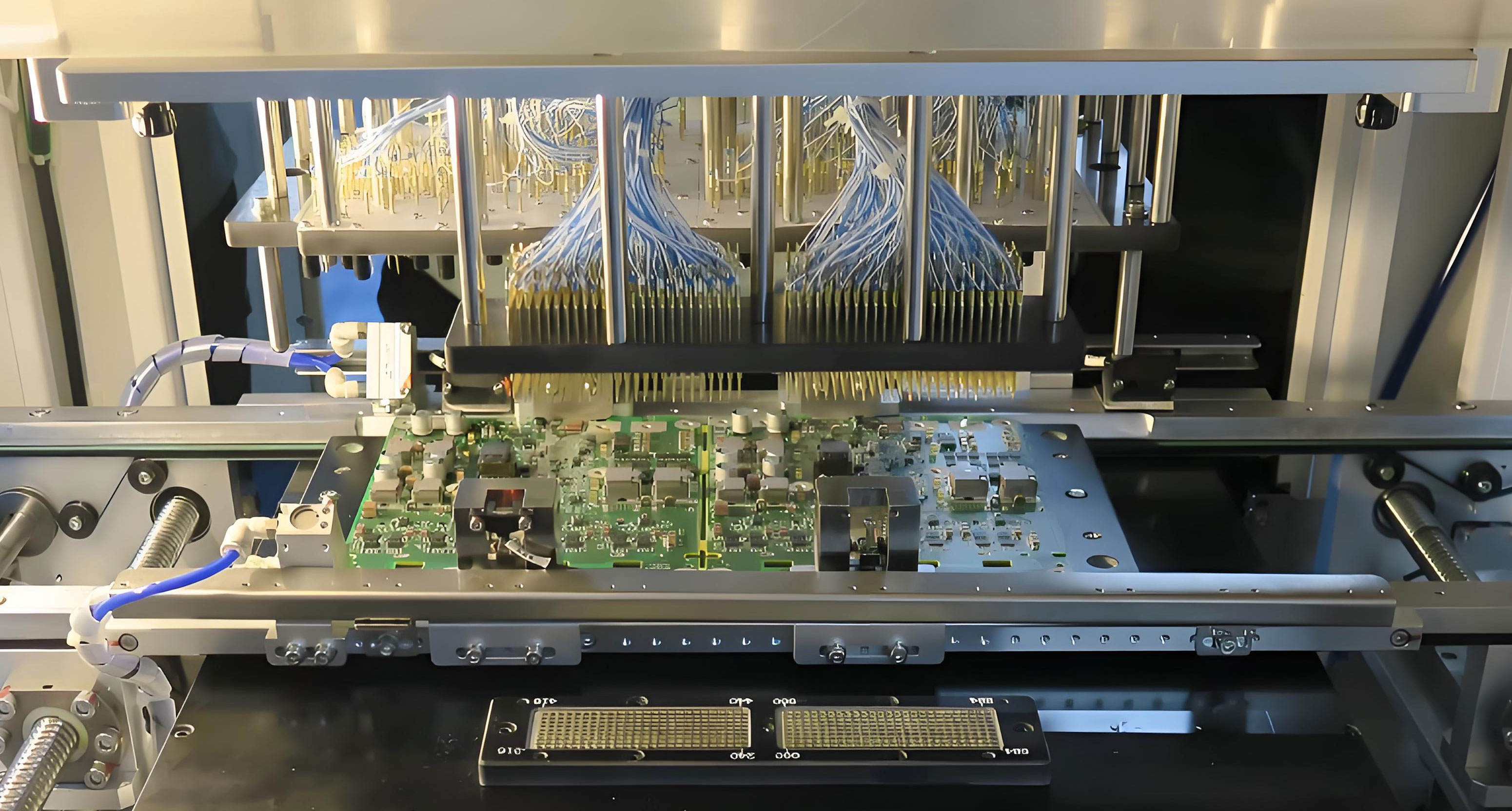
A well-designed ICT FCT Test Fixture is no longer just a production tool—it is the bridge between engineering design and real-world product performance.
Why Optical Module Testing Is Becoming More Complex
Modern optical modules contain increasingly sophisticated PCB architectures, high-speed signal paths, advanced DSP chips, optical engines, and thermal management components.
After SMT assembly, manufacturers must verify:
Signal integrity
Power delivery performance
Optical transmission quality
Thermal behavior
Functional reliability
This makes Optical Module Testing significantly more demanding than traditional PCB validation.
As bandwidth increases from 400G to 800G and eventually 1.6T, manufacturers face several key challenges:
High-Speed PCB Testing Requirements
Modern optical module PCBs contain:
High-speed differential signals
RF circuits
Power management circuits
Optical interfaces
Traditional test setups often struggle to support comprehensive High-Speed PCB Testing while maintaining repeatability and throughput.
Increasing Fixture Complexity
An advanced ICT FCT Test Fixture may require hundreds or even thousands of signal connections.
Managing these connections efficiently becomes a major challenge for engineering teams.
Faster Product Iteration Cycles
Optical communication products evolve rapidly.
Test systems must support multiple product variants without requiring complete redesigns for every new generation.
The Role of ICT FCT Test Fixture in Optical Module Manufacturing
An effective ICT FCT Test Fixture performs two critical functions.
ICT Testing
In-Circuit Testing verifies:
Component placement
Solder joint quality
Electrical continuity
Assembly defects
Early defect detection reduces manufacturing costs and improves yield.
FCT Testing
Functional Circuit Testing validates:
Real operating performance
Communication functionality
Power consumption
Thermal behavior
Optical transmission performance
Together, ICT and FCT ensure every optical module meets production and reliability standards before shipment.
Building a Scalable PXI Test System for Optical Module Testing
Many leading manufacturers utilize a modular PXI Test System architecture to support flexible and high-performance testing environments.
A modern PXI Test System typically integrates:
Data acquisition modules
RF instruments
Switching systems
Digital multimeters
Power measurement equipment
Optical testing instruments
However, connecting hundreds or thousands of test channels efficiently remains a major challenge.
This is where a reliable Mass Interconnect System becomes essential.
Why Mass Interconnect Systems Improve Testing Efficiency
A Mass Interconnect System acts as the central interface between test instruments and test fixtures.
Instead of manually reconnecting individual cables for each product variant, engineers can quickly swap fixture adapters while maintaining access to all instrument resources.
Key benefits include:
Higher Signal Density
TFC V50 Mass Interconnect platforms support extremely high channel density, enabling large-scale test architectures while reducing cabinet space requirements.
Faster Fixture Changeover
When a new optical module design enters production, engineers only need to replace the corresponding adapter fixture rather than redesigning the entire testing platform.
Improved Reliability
Reliable signal transmission is essential for both Optical Module Testing and High-Speed PCB Testing.
TFC Mass Interconnect platforms are designed for more than 20,000 mating cycles, ensuring long-term operational stability.
Support for Mixed Signals
Modern optical modules require:
Signal connections
Power interfaces
RF channels
Fiber optic connections
A modular Mass Interconnect System allows all signal types to be integrated into a single testing platform.
TFC Solution for Optical Module Testing
TFC provides complete connectivity solutions for:
Optical Module Testing
ICT FCT Test Fixture Integration
PXI Test System Connectivity
High-Speed PCB Testing Applications
Automated Production Test Platforms
Our portfolio includes:
VH Series Mass Interconnect Platforms
Designed for PCB and PCBA testing environments where high-density connections and frequent fixture changes are required.
V50 Mass Interconnect System
Supports large-scale PXI Test System architectures with up to thousands of signal channels and modular expansion capability.
Automated Docking Solutions
Ideal for automated production lines requiring fast and repeatable fixture engagement.
These solutions help manufacturers reduce setup time, improve throughput, and increase overall testing reliability.
Conclusion
As optical communication technology advances toward 800G and 1.6T, the importance of reliable Optical Module Testing continues to grow.
A successful testing strategy requires more than advanced instruments. It requires a scalable ICT FCT Test Fixture, a flexible PXI Test System, a high-performance Mass Interconnect System, and a robust approach to High-Speed PCB Testing.
Manufacturers that invest in modern testing infrastructure today will be better positioned to achieve higher yields, faster product launches, and superior product reliability tomorrow.
Looking for a customized Optical Module Testing solution?
Contact TFC to learn how our Mass Interconnect and PXI connectivity platforms can support your next-generation testing projects.
