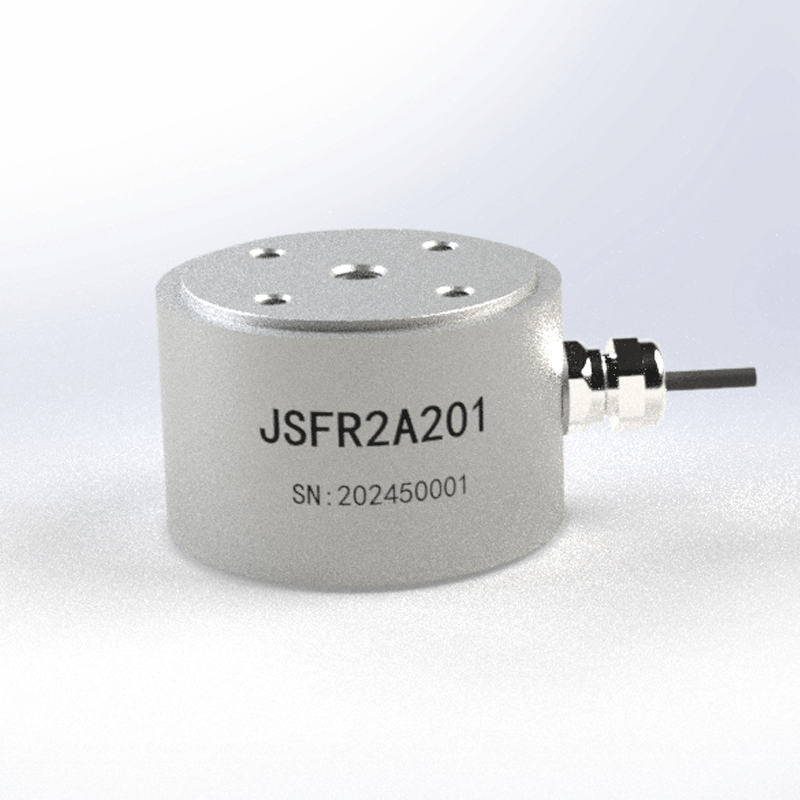
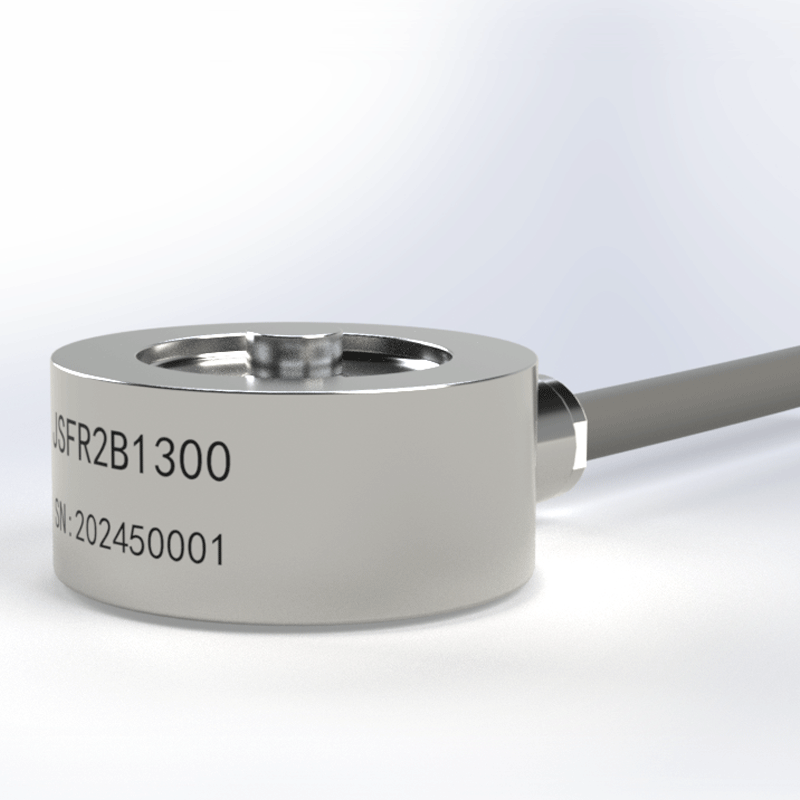
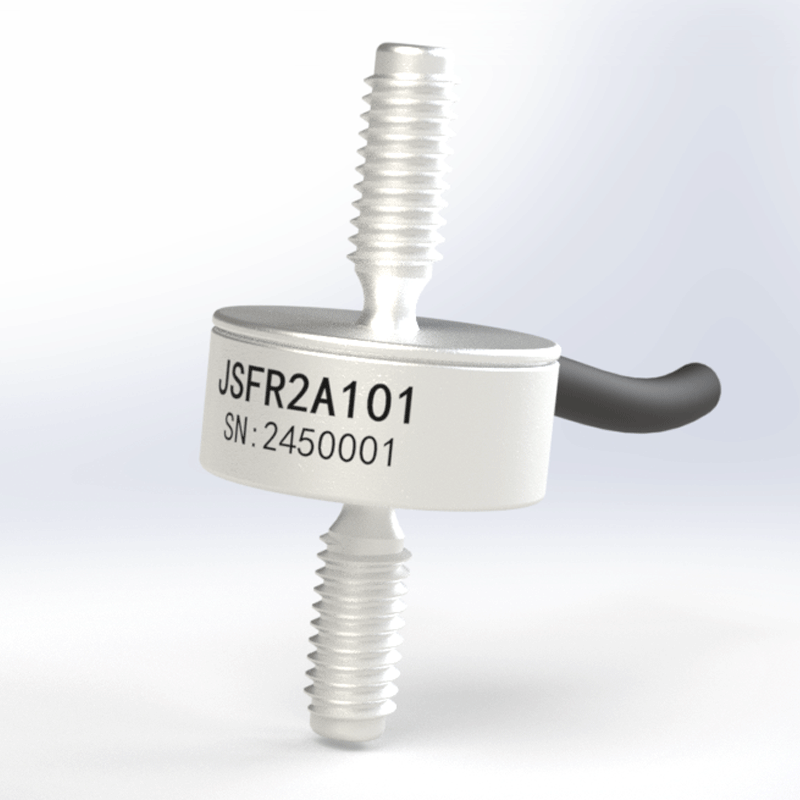
The JSFR2A2 is a very compact, highly accurate miniature tension compression load cell designed mainly to measure the force in two directions in very small spaces. By using silicon piezoresistive technology, it not only reaches a high level of accuracy (<0.1% F.S.), but also has a very good stability, characteristics that make such a product perfect for being integrated into material testing machines, push-pull force testers, and fatigue testing systems. Besides, a very simple column-shaped and highly durable stainless steel case allow for its functioning not only in laboratory but also in industrial as well as R&D environments.
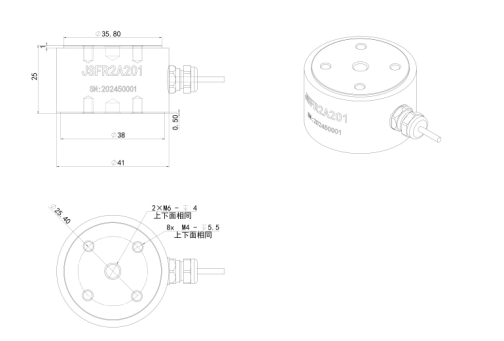
Product Dimensions
Product Electrical Interface
Wiring Color
Red
Black/Blue
Green
White
Pin Definition
Power Positive (+V)
Power Ground* (GND)
Signal Positive (+Out)
Signal Negative (-Out)
* Note: Reference ground for signal measurement
Technical Advantages
● Ultra-precision & Repeatability: An accuracy level of <0.1% F.S. that allows you to achieve reliable outcomes whether you are doing research or are engaged in quality control. ● Two-Directional Force Measurement: The device is capable of sensing both tensile and compressive forces within a selectable range of 0.1–20 N. ● Barely Noticeable Impact: Given that full-scale deformation is less than 0.3 mm, the sensor mechanically affects the test setups to the least degree possible. ● Small & Strong Design: The use of stainless steel for the housing ensures resistance to corrosion and thus a long service life even in unfavourable conditions. ● Effortless Integration: Usual voltage excitation (5–15 V DC) combined with an analog output makes it easy to connect to data acquisition systems without the need for an intermediary device.
Core Applications
● Material Testing Machines: Give accurate confirmation of the applied force in universal testing machines for plastics, metals, and composites. ● Push-Pull Force Testers: Works seamlessly with automated systems for checking connector insertion force and switch actuation. ● Fatigue Testing Systems: Provides data on cyclic loads on the components necessary for the determination of fatigue life. ● Laboratory & Research: Facilitates the research of micro-mechanics as well as the analysis of the performance of prototypes. ● Production Line QC: Guarantees that assembly forces conform to the standards for devices like electronics, medical equipment, and automotive subsystems.
Performance Specifications
Unless otherwise specified, all testing was conducted under the following conditions: 12 VDC, 25°C, 50% R.H., and 1 standard atmosphere.
No.
Parameter
JSFR2A2-0.1
JSFR2A2-0.2
JSFR2A2-0.5
JSFR2A2-1
JSFR2A2-2
JSFR2A2-5
JSFR2A2-10
JSFR2A2-20
Unit
1
Rated Capacity
0.1
0.2
0.5
1
2
5
10
20
kN
2
Rated Output
2.0±10%
mV/V
3
Zero Output
±0.05
mV/V
4
Input Resistance
385±50
Ω
5
Output Resistance
350±50
Ω
6
Insulation Resistance
≥5000 MΩ @ 100V DC
-
7
Excitation Voltage
5-15 (Recommended: 10)
V DC
8
Non-Linearity
< 0.1
% F.S.
9
Hysteresis
< 0.1
% F.S.
10
Repeatability
< 0.05
% F.S.
11
Combined Error
< 0.1
% F.S.
12
Full-Scale Deflection
< 0.3
mm
13
Natural Frequency
> 800
Hz
14
Safe Overload
150
% F.S.
15
Ingress Protection
IP66
-
16
Housing Material
Stainless Steel
-
17
Operating Temperature
-20 to +80
°C
FAQs
1. Q: What is the major benefit of the piezoresistive principle in this load cell?
A: It results in very high accuracy (0.1% FS) and a high-frequency response (>800Hz) that makes it fit for dynamic force measurements in material testing and fatigue analysis. 2. Q: Is this sensor capable of measuring forces in both tension and compression?
A: That's right, it provides bidirectional measurement, so it will not only measure tension but also compression forces with the same high accuracy from 0.1kN to 20kN. 3. Q: Why is this sensor good for applications in small spaces?
A: The sensor's column is designed to be very compact, and it deflects very little (<0.3mm); thus, it can be used in very cramped spots where conventional load cells wouldn't be able to fit. 4. Q: How to pick the capacity model based on the needs of your work? A: You should pick a load capacity such that the load you apply during normal operations would be 50-80% of the maximum range of the model. In this way, you get the best possible accuracy and still have a 150% safety margin against overload. 5. Q: What does the IP66 protection rating allow the sensor to do?
A: IP66 means that the sensor is totally protected against dust and can withstand powerful water jets. This makes the sensor very robust for operation in industrial environments and laboratories where it has to be cleaned or where there may be moisture.
TFC was founded in 2015, with its headquarters located in Changsha, Hunan. It has a standardized workshop of over 6,000 square meters and takes "Making every connection more reliable, making every piece of data more accurate" as its guiding principle, dedicated to providing customers with high-performance component products and solutions. The company has three business divisions: Instrumentation, Connectors, and Sensors. It is a national high-tech enterprise integrating R&D, production, testing, and sales, covering technologies such as signal connection technology, signal conditioning technology, signal switching technology, and signal detection technology.
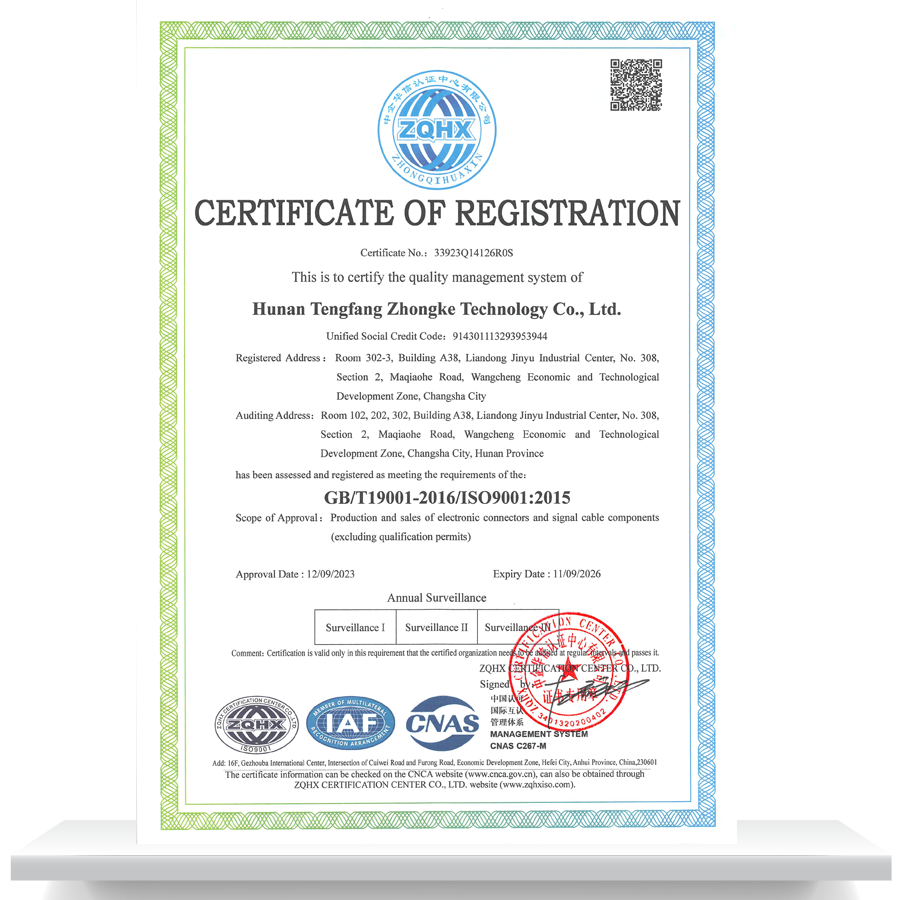
TFC has obtained National Standard (GB) Quality Management System Certification and Weapon Equipment (GJB) Quality System Certification. It has also established an independent and complete internal quality testing system. All products undergo strict full-process testing in accordance with national standards (GB) and weapon equipment standards (GJB) to ensure compliance and stability of performance.