Key Features
Multi-Topology 128-Channel Design: The device can handle a 1-wire/2-wire/4-wire multiplexer and matrix set-ups, thus giving the maximum flexibility for the test.
Precision Low-Voltage Measurement: In semiconductor testing, the device uses reed relays that are low in thermal drift to ensure that the signal switching is accurate.
Intelligent Relay Life Monitoring: The built-in usage counter keeps track of relay operations for predictive maintenance and lifespan.
Software-Configurable Architecture: It allows the change of dynamic topology without physically reconnecting via software control.
High-Density 3U PXIe Form Factor: A small 4HP design with a front-panel LFH-200 connector for a system that efficiently uses the space.
128-channel 1, 2, or 4-wire multiplexer switch module
Product Overview
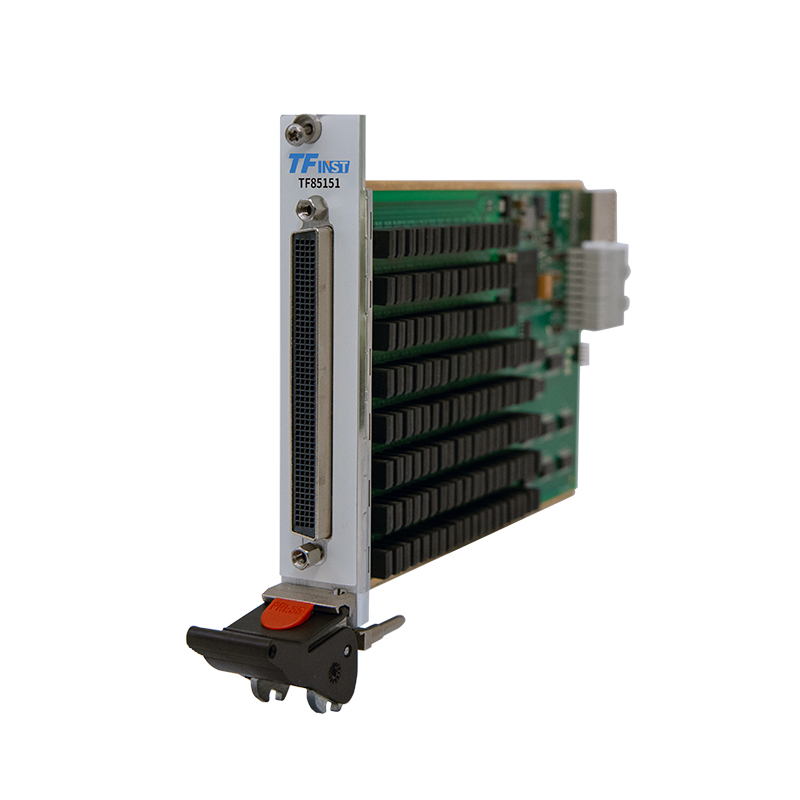
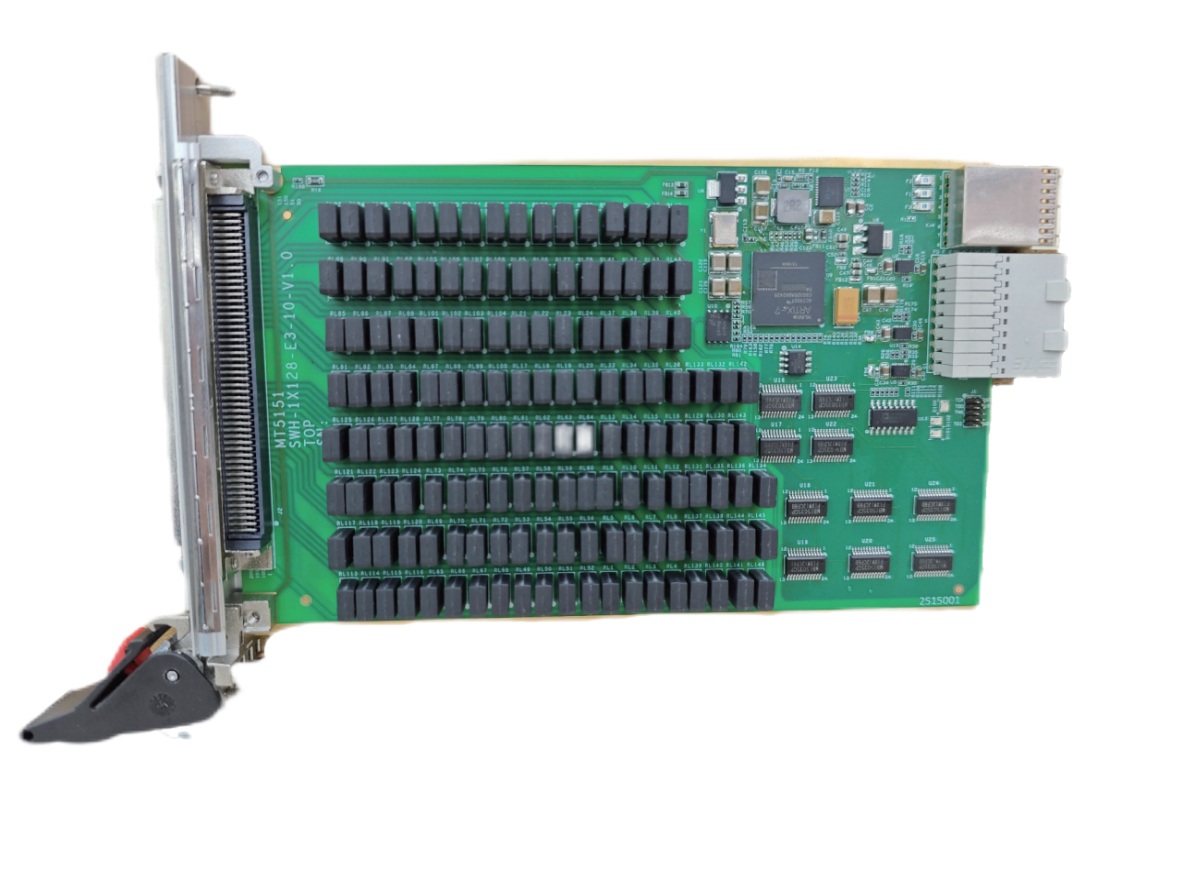
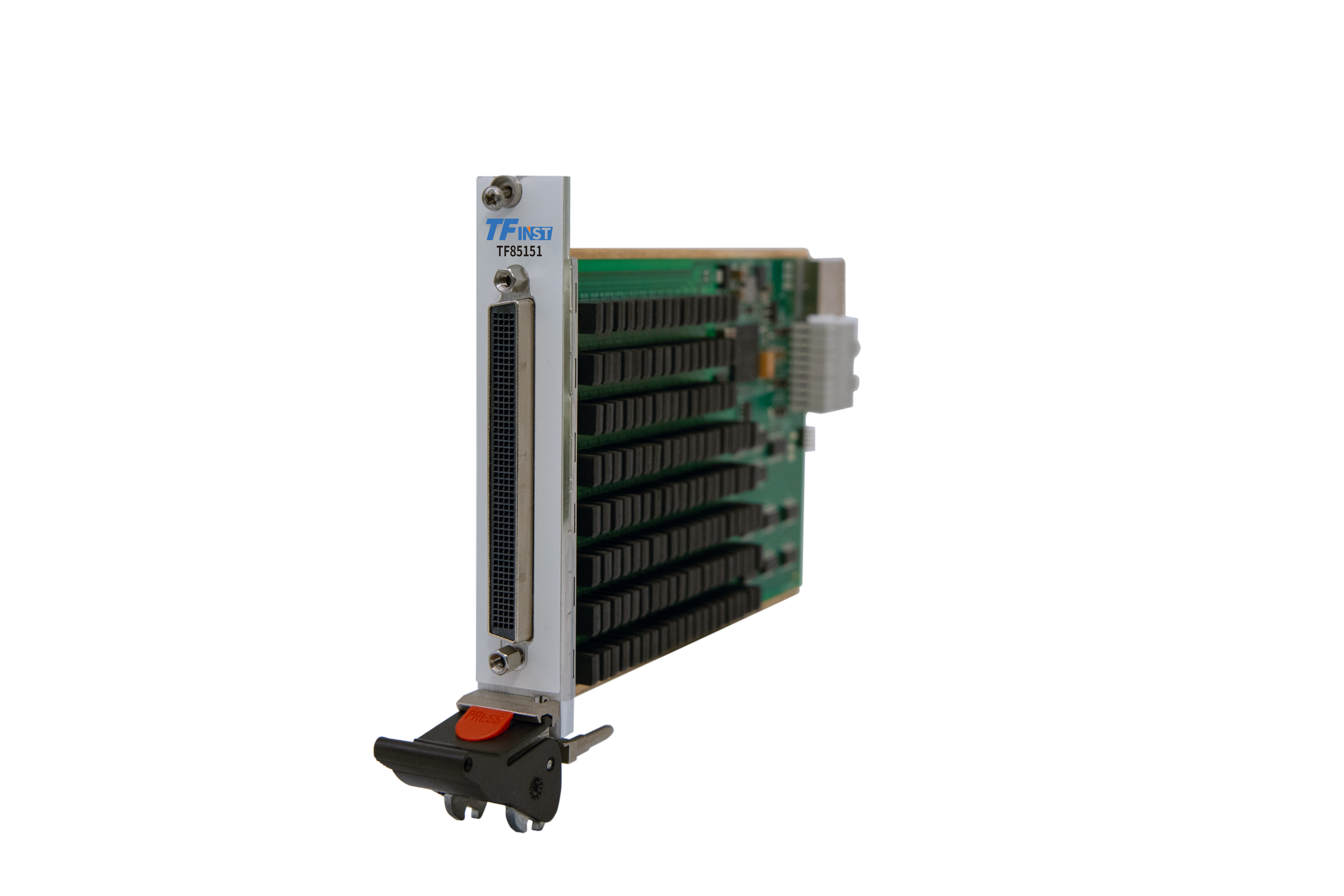
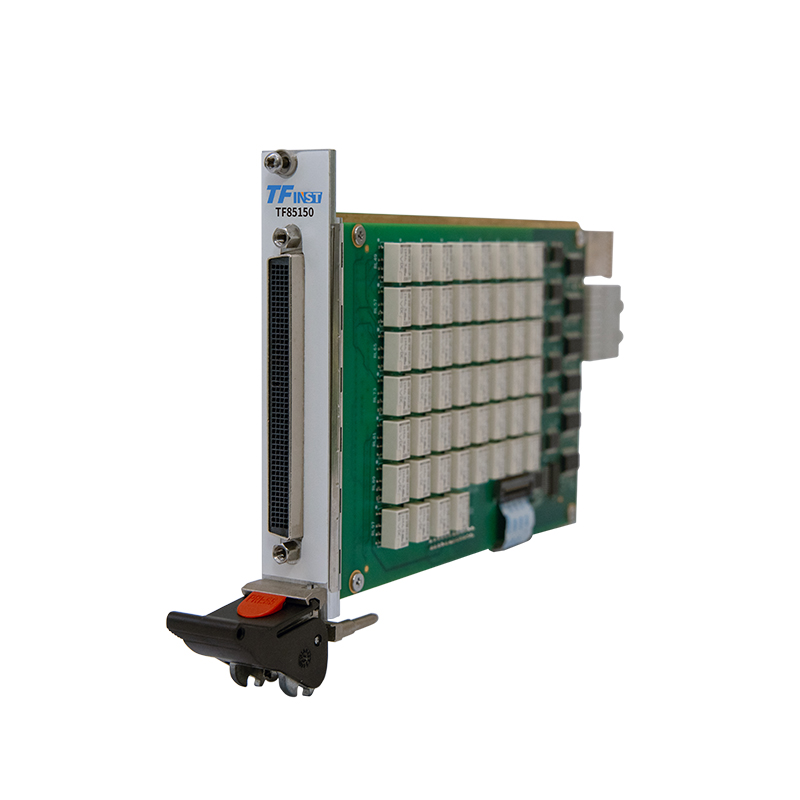
TF85151 is a high-density PXIe bus multiplexer switch module, and the main application of TF85151 is in the testing of semiconductors and electronic products. Users can set TF85151 in various different topologies through software operations to satisfy different user requirements.
TF85151 is equipped with reed relays, and TF85151 has a low thermal drift, which allows TF85151 to carry out very accurate measurements at low voltage levels. In the real testing scenario, users can preset their programs according to the testing plan; there is no need to change cable connections in the test system, and all channel switching of TF85151 can be automatically controlled, which thereby greatly saves testing time and increases efficiency.
TF85151 offers a variety of multiplexer and matrix configurations. TF85151 is the perfect choice for a system with a high number of channels or complicated channel systems. The multiplexer configurations of TF85151 include 1-wire 128x1, 2-wire 64x1, 4-wire 32x1 as well as multiple group configurations. The matrix configurations of TF85151 consist of 1-wire 4x32, 1-wire 8x16, and 2-wire 4x16, and the users can select the corresponding configuration of TF85151 through the host computer flexibly. To make testing more convenient, we also provision terminal boxes corresponding to different configurations of TF85151.
The total size of TF85151 is 3U, and the width of TF85151 is 4HP. All channel interfaces of TF85151 are brought out through the LFH-200-pin connector located on the front panel. TF85151 is characterized by a high number of channels per unit area and a compact structure.
Key Features
Enables various flexible topologies
LFH-200pin connection and lead-out
Modes: 1-wire, 2-wire, 4-wire
Number of channels: 128, 64, 32, 16
Number of groups: 1, 2, 4, 8
Compatible with operating systems like Windows / Linux
VISA-based DLL driver suitable for secondary development
High reliability and long service life, capable of supporting statistics and reading the number of times each relay is used
Applicaiton Scenarios
Multiplexer is integrated into the IC performance testing system, which can offer steady channel switching for the IC performance verification process.
Multiplexer is involved in wafer-level testing, thereby resulting in the efficient linking of test equipment and wafer test points at the stage of wafer-level verification.
Multiplexer is compatible with semiconductor automatic test equipment (ATE), acting as a pivotal channel module in the composite system of semiconductor automatic test equipment (ATE), fulfilling the role of the core link of the system.
Multiplexer is used in the electronics product electrical performance testing domain, helping the accurate measurement of the electrical parameters of electronic products via stable channel control.
The multiplexer fulfills the mentioned central application scenarios and is capable of meeting the high-demand channel management requirements in various electronic testing sectors.
Product Parameters
Basic Specifications
Operating Temperature
0℃ ~ +55℃
Overall Dimensions
3U
Storage Temperature
-22℃ ~ +70℃
Bus Type
PXIe
General Characteristics
Maximum Switching Voltage
60VDC ,30VACrms
Maximum Switching Current
0.4A
Maximum Switching Power
10W
Relay Type
Reed Relay
Open-Circuit Resistanc
>1×10⁹Ω
Expected Life
<1×10⁸
thermoelectric EMF
<50μV
Relay Operation Time
555 μs
Maximum Operating Frequency
16x1: 19MHz
On-Resistance
initial: <2Ω
128x1: 12MHz
end-of-life: >3Ω
Channel Isolation
200kHz
>68dB
1MHz
>40dB
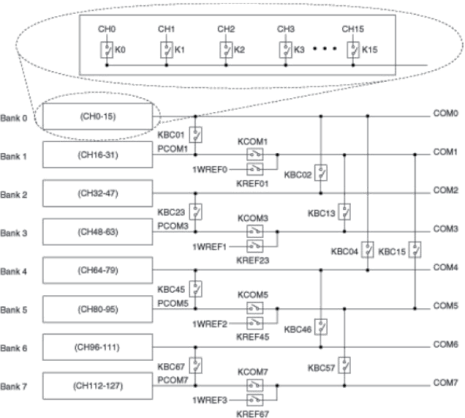
Topology Diagram
TF85151 Topology Diagram
Topology
1-wire 1281 multiplexer
1-wire two-group 641 multiplexer
1-wire four-group 321 multiplexer
1-wire eight-group 161 multiplexer
2-wire 641 multiplexer
2-wire two-group 321 multiplexer
2-wire four-group 161 multiplexer
4-wire 321 multiplexer
4-wire two-group 161 multiplexer
1-wire 432 matrix
1-wire 816 matrix
2-wire 416 matrix
Customization
The functions and the look of the TF85151 128-channel 1, 2, or 4-wire multiplexer switch module can be changed in a very flexible way in accordance with user directives so as to meet the requirements of different applications.
Every customized product of the TF85151 128-channel 1, 2, or 4-wire multiplexer switch module will correspond to a separately-created product model, which is very convenient for the users when placing an order of the customized product of the TF85151 128-channel 1, 2, or 4-wire multiplexer switch module at any time.
If the users have particular functional requirements or appearance-related requirements for the TF85151 128-channel 1, 2, or 4-wire multiplexer switch module, the TF85151 128-channel 1, 2, or 4-wire multiplexer switch module will be customized to suit those needs.
Each customized version of the TF85151 128-channel 1, 2, or 4-wire multiplexer switch module is independently recorded in the product model, so that the users, when making subsequent purchases, can quickly get to know the specifications of the customized product and thus can save the time of repeatedly communicating the customization requirements.
FAQ
1. Q: What are the benefits of using reed relays in this multiplexer?
A: Reed relays offer low thermal EMF (<50μV) and stable contact resistance, which is why they are the best choice for low-voltage signal switching in precision semiconductor testing and sensitive measurement applications.
2. Q: How many topology configurations does this module support?
A: The module supports 12 different topologies, namely 1-wire (128×1), 2-wire (64×1), 4-wire (32×1) multiplexers, and matrices (4×32, 8×16, 4×16), thus being extremely flexible for various test scenarios.
3. Q: What is the relay usage counting feature good for?
A: The detailed per-relay usage data is what makes predictive maintenance planning possible; thus, you can keep an eye on the life span of each relay and change the modules before they break in your heavily automated test situation.
4. Q: What kind of applications can make use of the 19MHz bandwidth?
A: The bandwidth is useful for the testing of audio, medium-speed digital signals, and up to HF bands of the RF, for example, for communications testing and semiconductor characterization, while still maintaining signal integrity.
5. Q: What is the role of the LFH-200pin front connector in simplifying system integration?
A: The high-density connector offers a single-point solution for all 128 channels, thus cable work complexity is reduced, and a stable signal path is ensured while the rack system setup time is minimized.
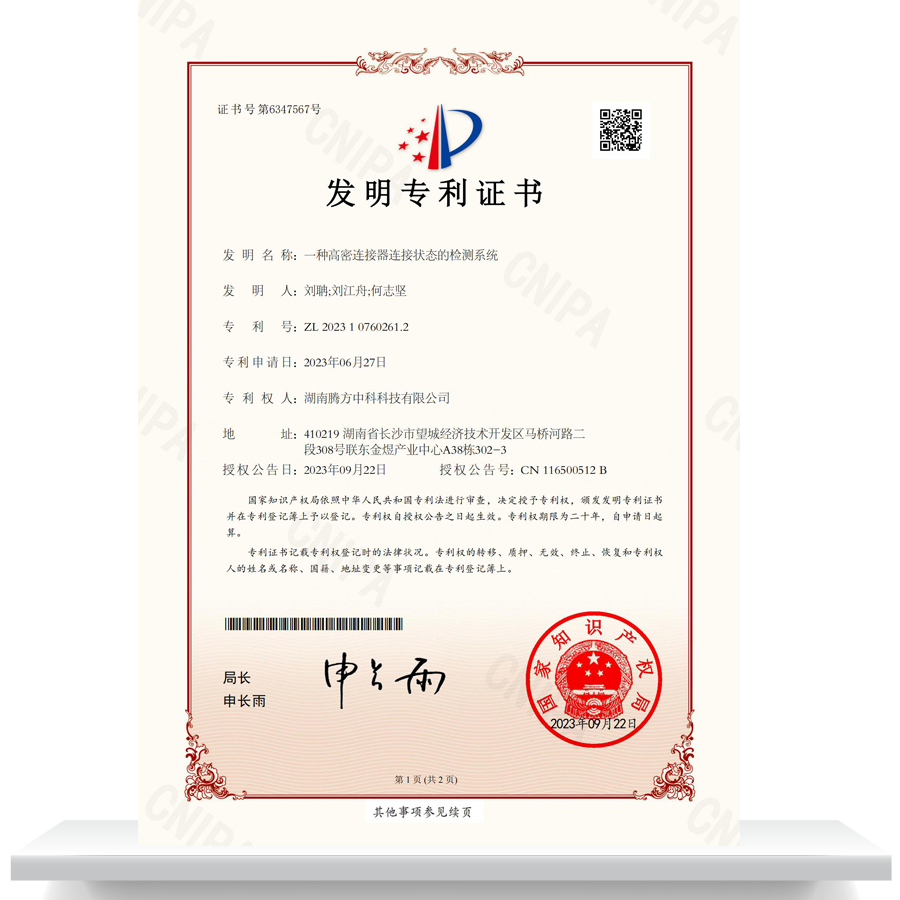
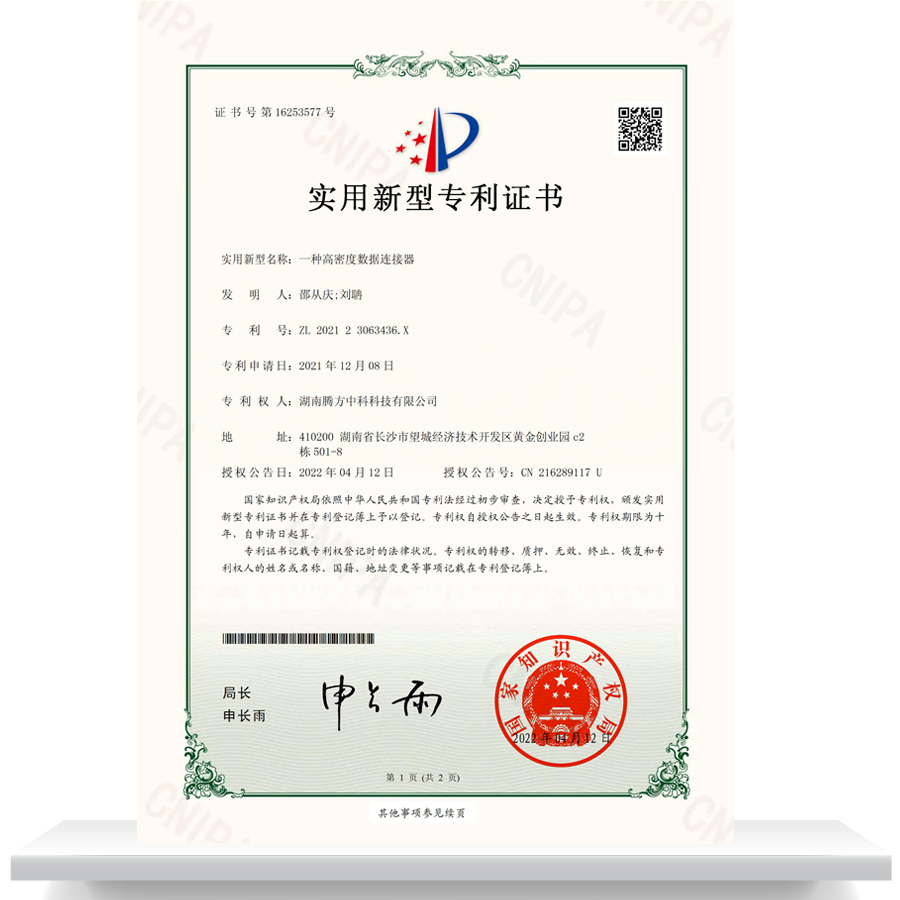
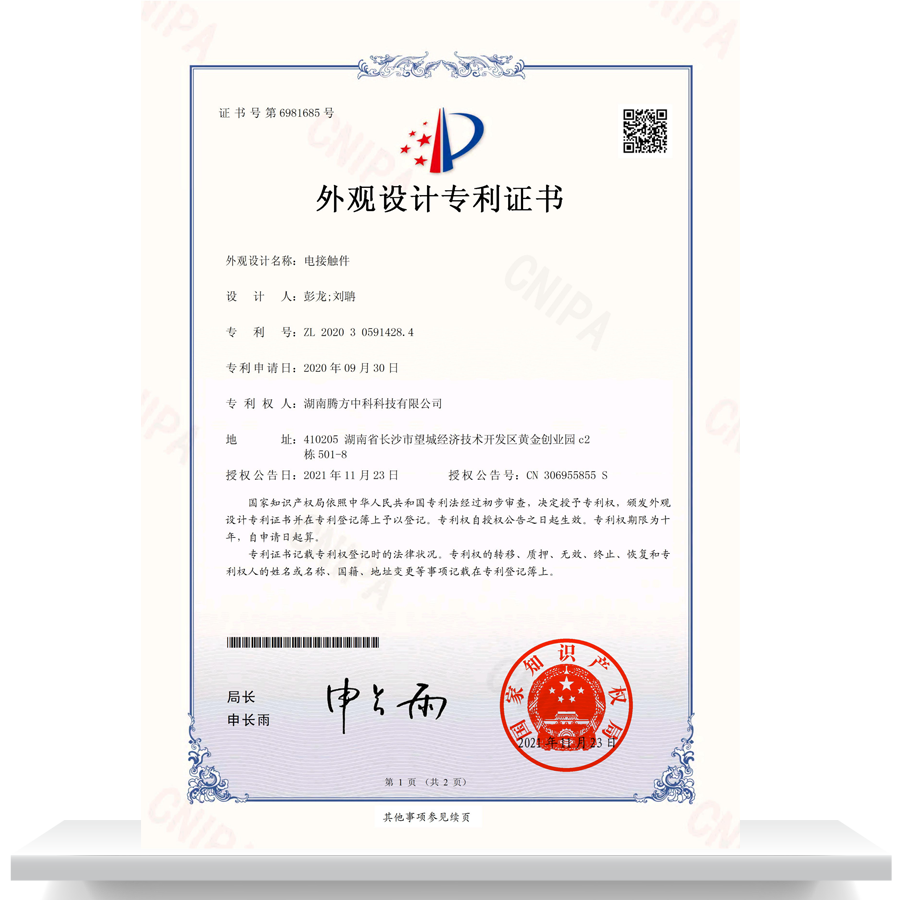
TFC was founded in 2015, with its headquarters located in Changsha, Hunan. It has a standardized workshop of over 6,000 square meters and takes "Making every connection more reliable, making every piece of data more accurate" as its guiding principle, dedicated to providing customers with high-performance component products and solutions. The company has three business divisions: Instrumentation, Connectors, and Sensors. It is a national high-tech enterprise integrating R&D, production, testing, and sales, covering technologies such as signal connection technology, signal conditioning technology, signal switching technology, and signal detection technology.
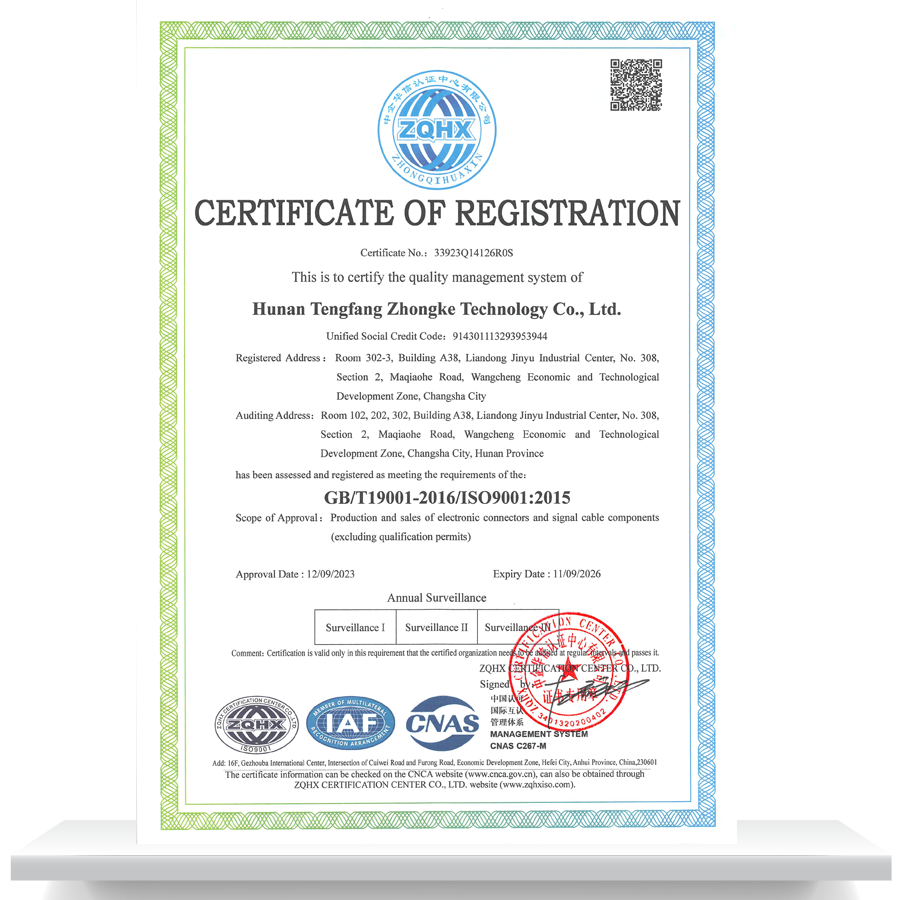
TFC has obtained National Standard (GB) Quality Management System Certification and Weapon Equipment (GJB) Quality System Certification. It has also established an independent and complete internal quality testing system. All products undergo strict full-process testing in accordance with national standards (GB) and weapon equipment standards (GJB) to ensure compliance and stability of performance.