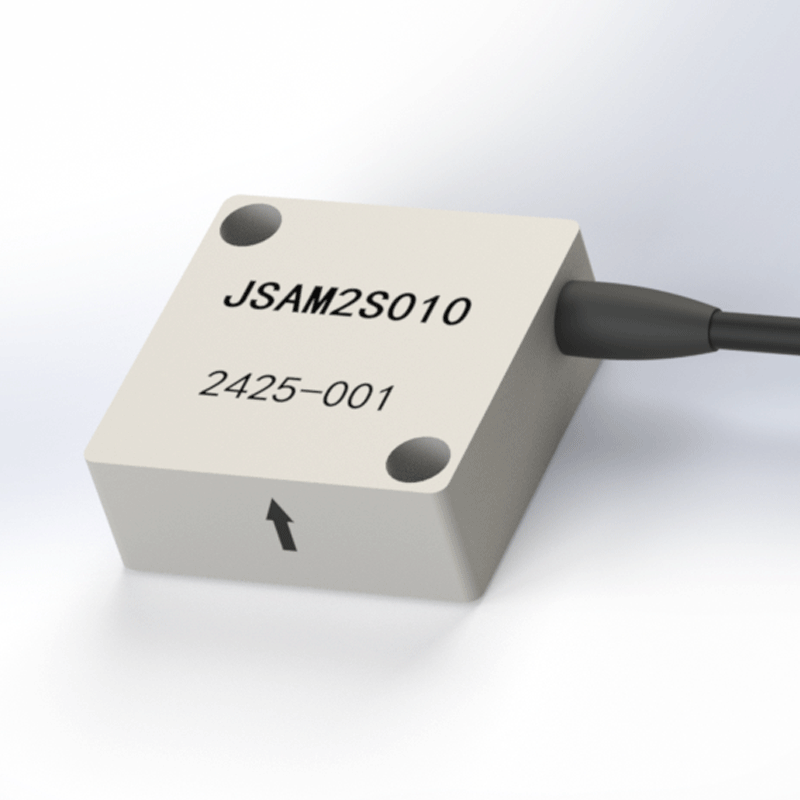
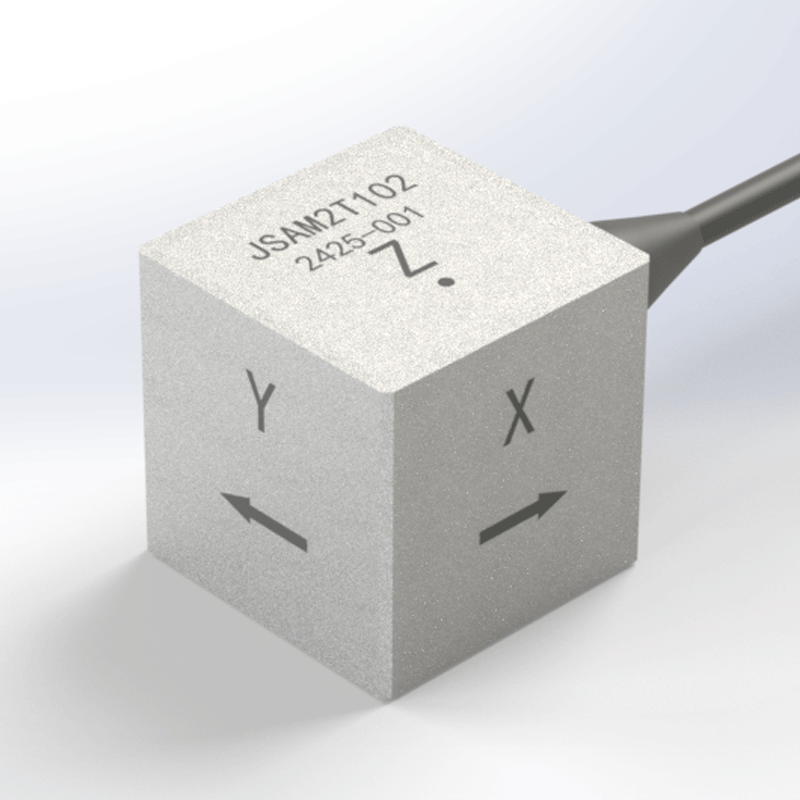
● True DC response for both tilt and static acceleration measurement
● Measurement range selectable from ±2g to ±30g
● Linearity of less than 0.1% FS
● High mechanical shock capability - 5000g on any axis
● Very low noise density between 35-60 μg/√Hz
● Large temperature range -40°C to +85°C
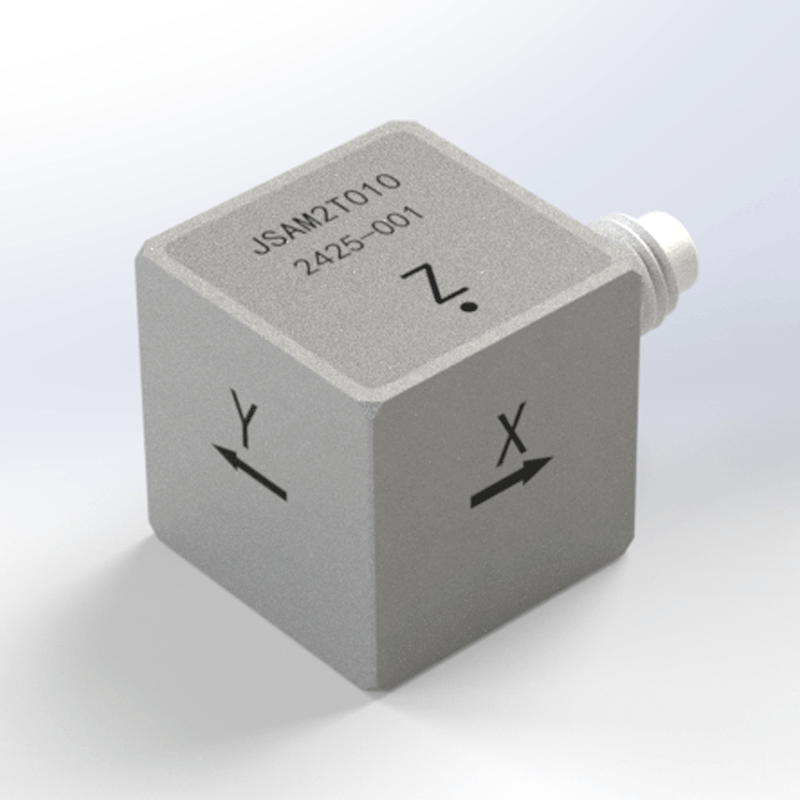
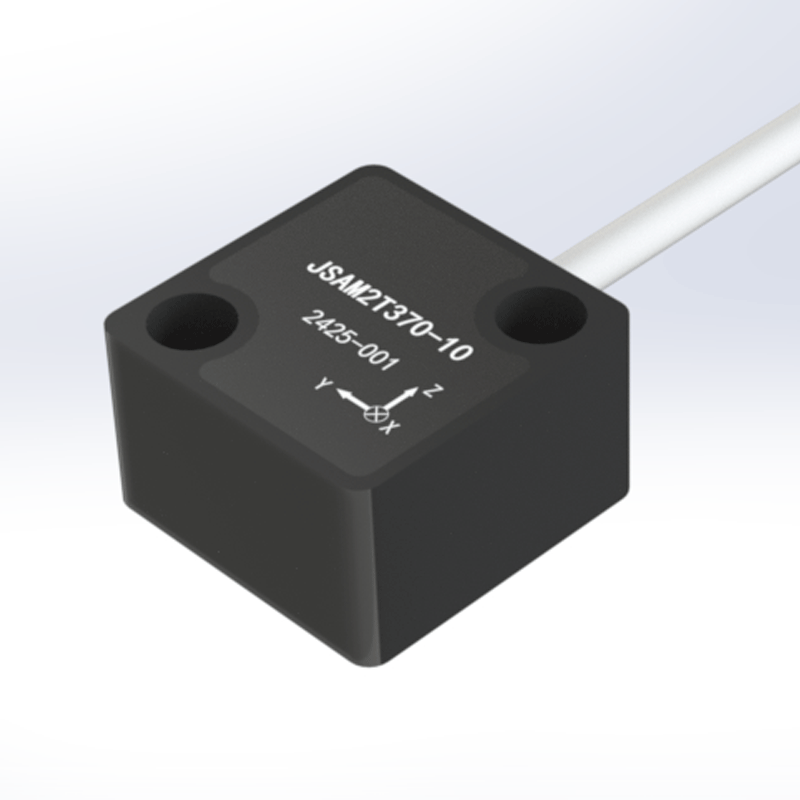
The JSAM2T0 Triaxial Accelerometer is a state-of-the-art device, incorporating the most recent developments in MEMS Accelerometer Sensor technology to offer superior performance even in the most challenging measurement situations. This elegantly designed Triaxial Accelerometer is equipped with advanced MEMS variable capacitance sensing technology, enabling it to accurately measure ultra-low frequency acceleration from true DC (0 Hz) to 800 Hz, thus making it the perfect Low Frequency Vibration Sensor for static and dynamic precision acceleration measurement.
Built around a robust 304 Stainless Steel Accelerometer housing, the unit combines excellent durability with long-term stability even in demanding environments. The monolithic stainless steel construction, together with 3D-packaged sensing elements, allows obtaining the best performance, including the excellent frequency response and very low transverse sensitivity. This DC Response Accelerometer addresses the limitations of traditional piezoelectric sensor in terms of static acceleration and slow motion measurement.
The MEMS Accelerometer Sensor is a perfect match for situations where the safety, healthcare, and consumer electronics applications demand high reliability and precision. The Triaxial Accelerometer ensures minimal cross-talk by virtue of its ≤5.0% transverse sensitivity rating while simultaneously measuring acceleration along three axes. The 304 Stainless Steel Accelerometer structure provides excellent EMI shielding when conducting earth connection via M4 mounting screws, thus preserving the signal quality even in electrically noisy environments.
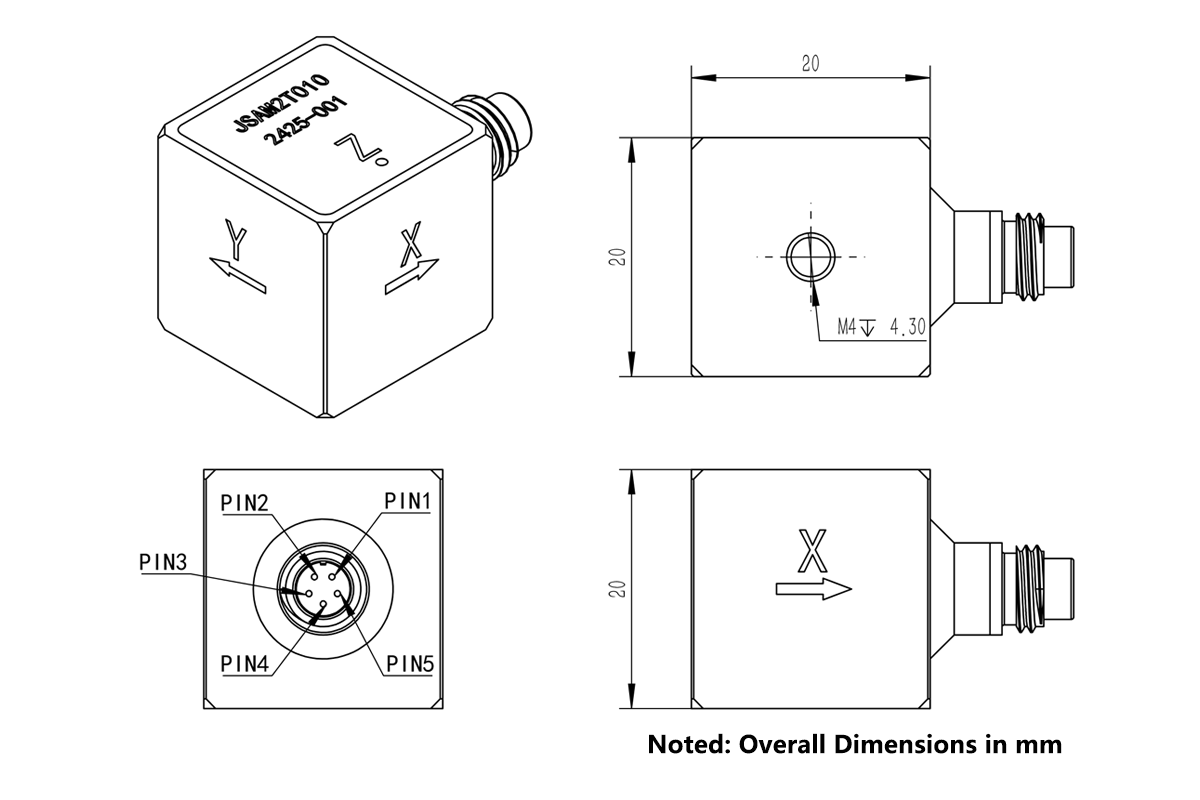
Product Dimensions
Product Electrical Interface
Wiring color
Red
Black/blue
Green
Yellow
White
Wiring Definition
Power positive
Power ground*
X-axis output
Y-axis output
Z-axis output
* Note: Reference ground for signal measurement
Performance Specifications
The JSAM2T0 sensor is a triaxial acceleration measurement sensor. Its key performance specifications are listed as below.
Unless otherwise specified, all testing was conducted under the following conditions: 12 VDC, 25°C, 50% R.H., and 1 standard atmosphere.
Testing and development of automotive safety systems Biomedical devices and patient monitoring Industrial vibration analysis and predictive maintenance Consumer electronics motion sensing Structural health monitoring and tilt measurement
This Low Frequency Vibration Sensor has different ranges to better fit your needs. The ±2g version offers great sensitivity (1000 mV/g) and can detect very small vibrations and accurately measure tilt, whereas the ±30g version tolerates greater shocks without losing the signal. The capability of the DC Response Accelerometer makes it especially useful for situations where both static (gravity-based) and dynamic acceleration have to be measured.
The JSAM2T0 raises the bar of MEMS Accelerometer Sensor performance with its excellent detailed specifications, sturdy manufacture, and functional versatility. Here is a leading-edge Triaxial Accelerometer at your fingertips, combining precision, durability, and technical sophistication - a smart choice for engineers and researchers who are looking to monitor acceleration reliably even under different environmental conditions.
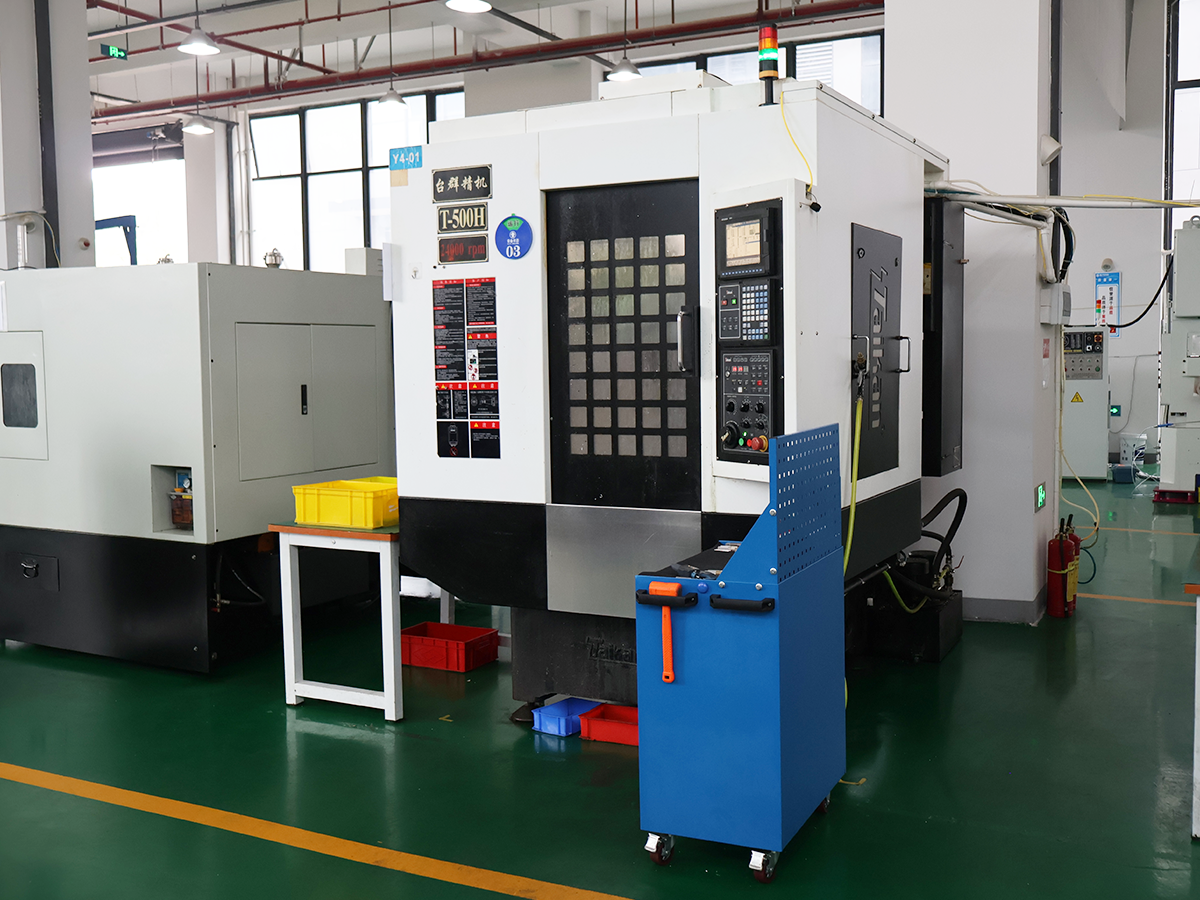
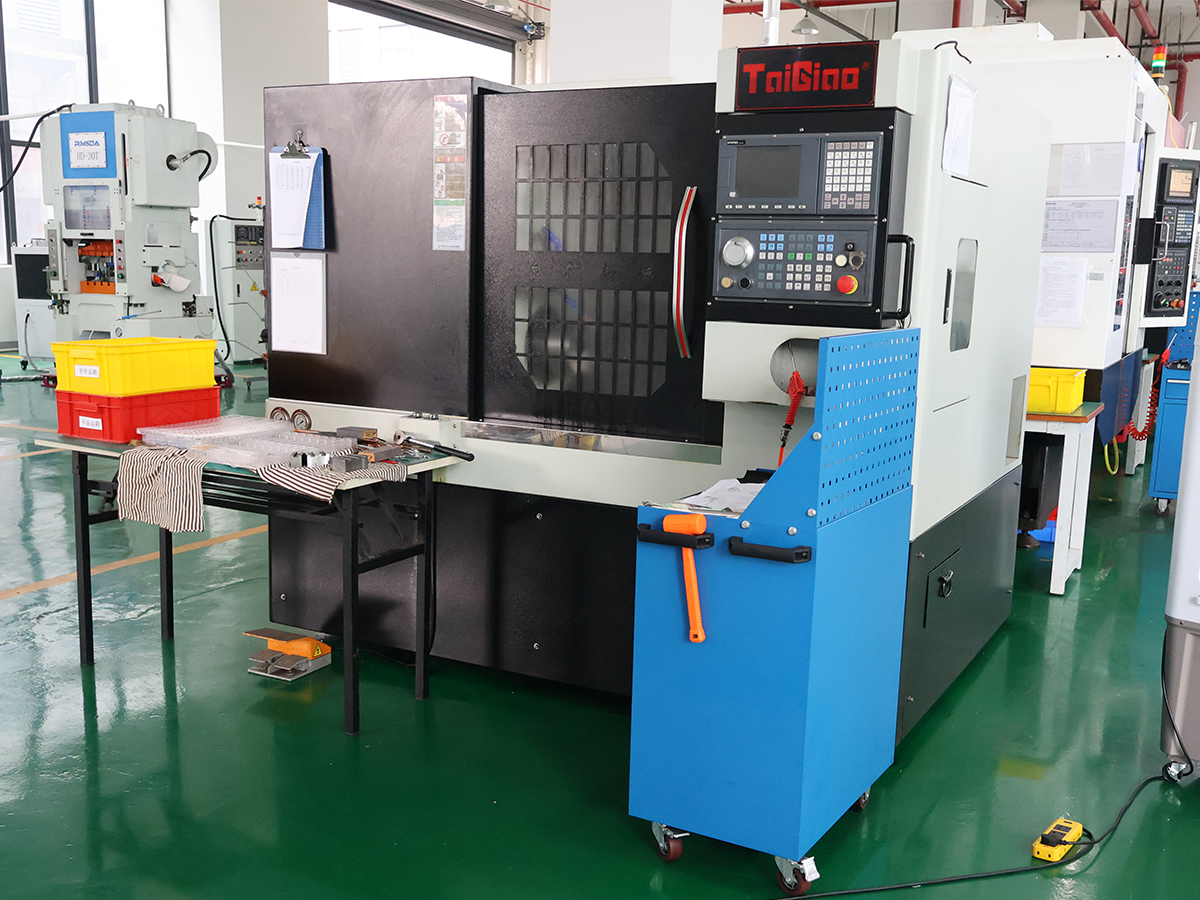
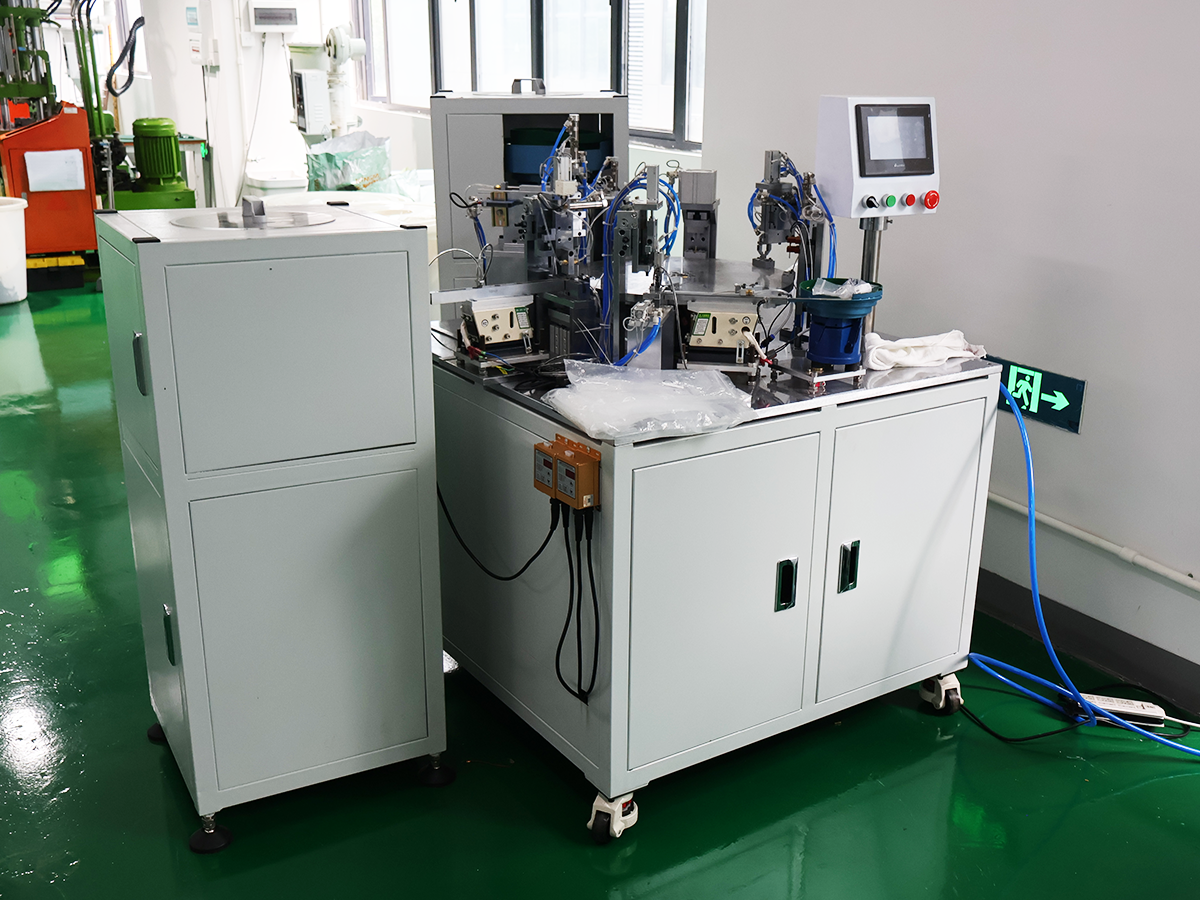
AProduction Equipment
MEMS Sensor
Three Axis Sensor
MEMS Accelerometer Sensor
FAQ
1. Q: What advantage does the MEMS variable capacitance sensing technology have over others in this particular accelerometer? A: Mainly, it is a very good sensor for measuring ultra-low frequency acceleration down to 0 Hz (DC response). That's why it is perfect for applications that require the measurement of constant or extremely slow acceleration, e.g., tilt sensing in automotive safety systems or slow-motion biomechanical studies, which, unfortunately, piezo sensors cannot perform. 2. Q: How to decide which model (JSAM270-2 versus JSAM270-30) would be the most appropriate one for me? A: The question is what maximum acceleration (g-range) you are going to measure. If you are interested in low-level vibrations or static tilt, go for the ±2g or ±10g model. When the application involves higher shock or vibration, the ±15g or ±30g models should be considered. Keep in mind that a lower g-range model (e.g., ±2g) has a larger sensitivity (1000 mV/g), thus producing a stronger output for smaller accelerations, whereas the higher g-range model (e.g., ±30g, 66.7 mV/g) prevents signal clipping during high-g events, but the response per 1g is smaller.
3. Q: While scanning the chart, I noticed the term "Transverse Sensitivity". What does it mean and why is it important? A: Transverse Sensitivity (≤5%) tells how much the sensor will respond to an acceleration at right angles to the main sensing axis. The smaller the better. This sensor has a very low value, achieved by its accurate 3D packaging, which means that it is highly immune to crosstalk from off-axis motions. Hence, it ensures that the measurement along each axis (X, Y, Z) is correct and not drastically influenced by vibrations coming from other directions, which is essential for accurate 3D motion analysis. 4. Q: Could you please show me how to interpret the "Noise Density" parameter (for example, 35 μg/√Hz)? A: Noise Density is the limit of the sensor's resolution. The smaller the value, the more the sensor is able to detect the smaller the signal. The JSAM270-2 device has only 35 μg/√Hz, which makes it very sensitive to the faintest vibrations. The JSAM270-30 piece has a value of 60 μg/√Hz, which is still respectable, but it puts a limit on the highest measurement range.
Generally speaking, for a low vibration level situation in predictive maintenance or doing bio-medical measurements which are extreme sensitive, it is the lower g-range (and less noisy) devices that are the right choice. 5. Q: The accelerometer sensor case is made of grounded 304 stainless steel. Does it affect installation in any way? A: To guarantee effective electrical contact with the host structure, the conductive case must be grounded properly through the M4 mounting screws. Thus, it will provide a consistent ground reference and act as a shield against electromagnetic interference (EMI), which is extremely important to achieve high-quality signals in electrically noisy environments such as automotive or industrial. The mounting surface should be clean and conductive for the best results.
TFC was founded in 2015, with its headquarters located in Changsha, Hunan. It has a standardized workshop of over 6,000 square meters and takes "Making every connection more reliable, making every piece of data more accurate" as its guiding principle, dedicated to providing customers with high-performance component products and solutions. The company has three business divisions: Instrumentation, Connectors, and Sensors. It is a national high-tech enterprise integrating R&D, production, testing, and sales, covering technologies such as signal connection technology, signal conditioning technology, signal switching technology, and signal detection technology.
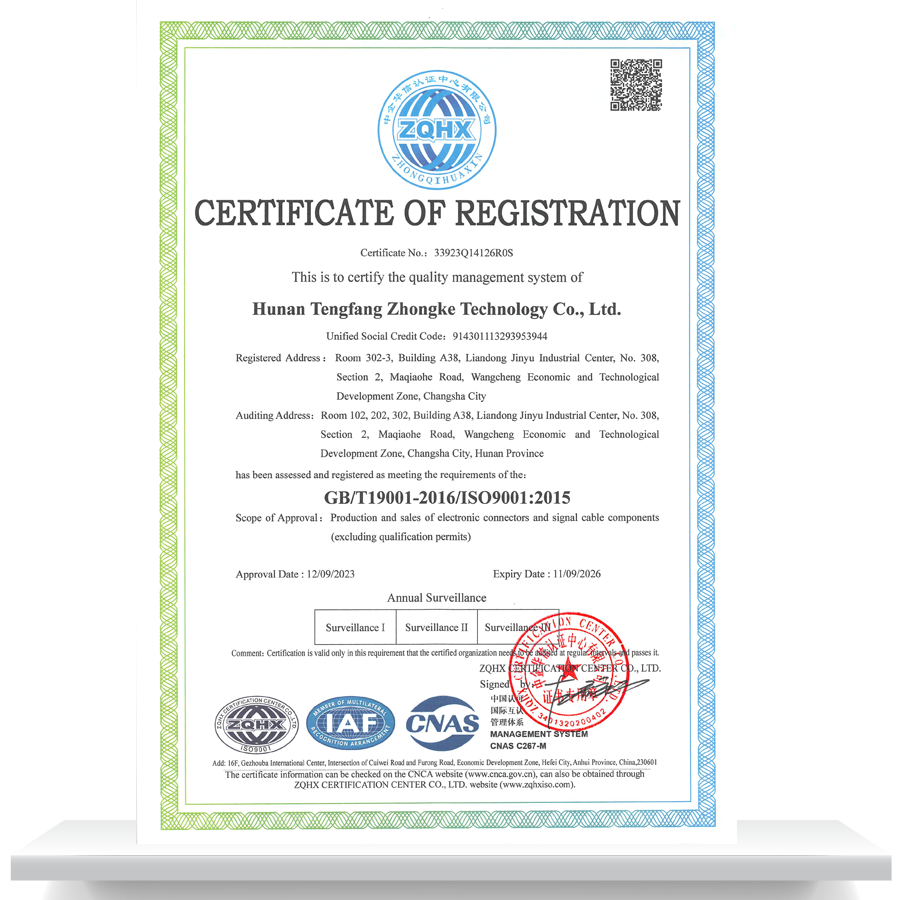
TFC has obtained National Standard (GB) Quality Management System Certification and Weapon Equipment (GJB) Quality System Certification. It has also established an independent and complete internal quality testing system. All products undergo strict full-process testing in accordance with national standards (GB) and weapon equipment standards (GJB) to ensure compliance and stability of performance.