Housing made of 304 stainless steel
Can measure ultra-low frequency acceleration
Very high shock resistance: 5000g
Selectable measurement ranges: ±2g to ±30g
Based on MEMS variable capacitance technology
Linearity: < 0.1% FS
Precision Low-Frequency Measurement for Demanding Applications
Product Overview
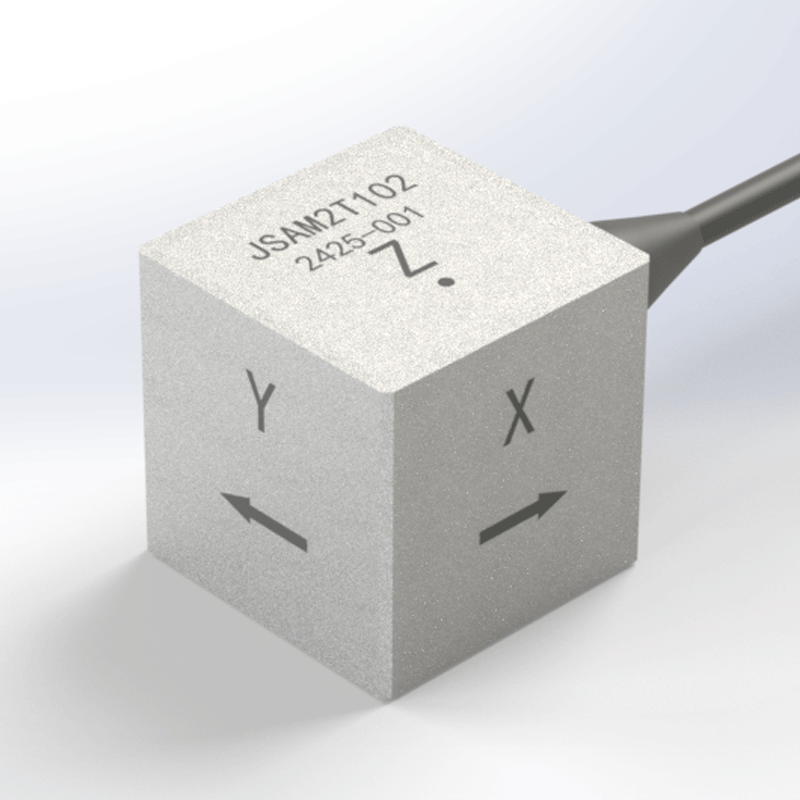
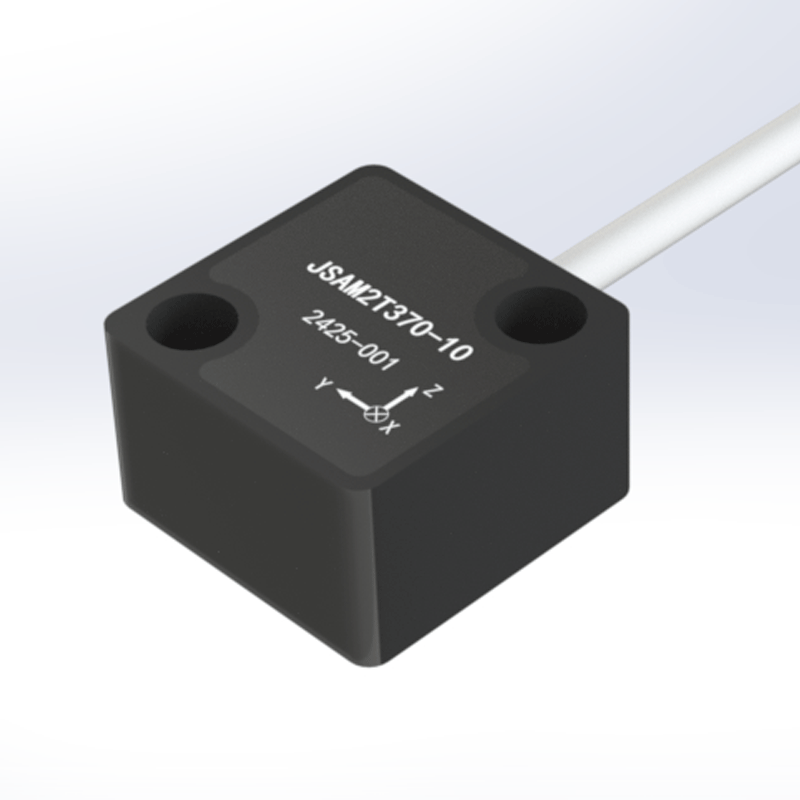
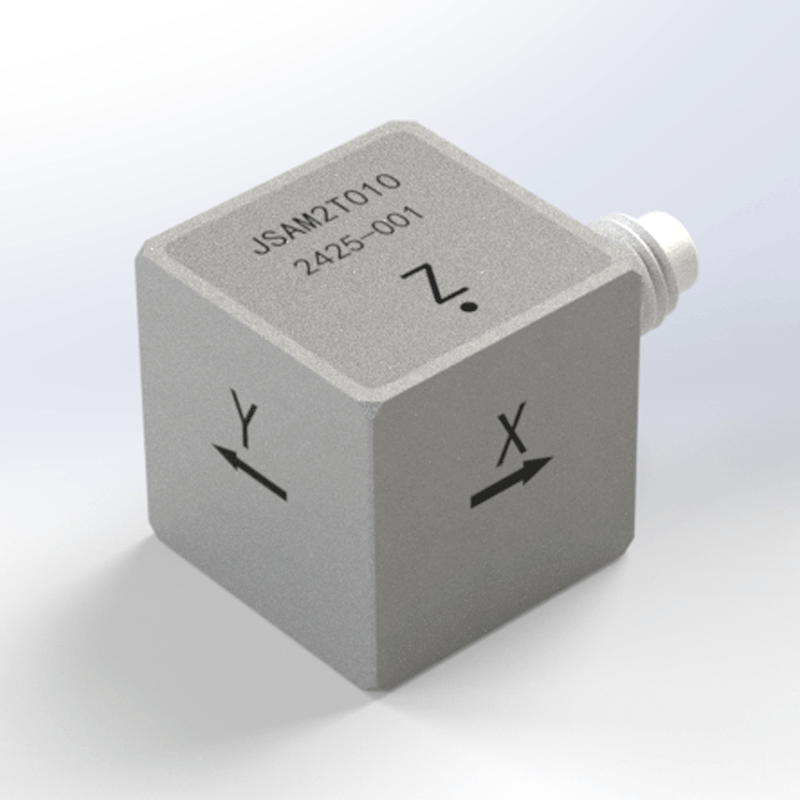
The JSAM2T1 Triaxial MEMS Accelerometer is redefining the accuracy for the low-frequency measurement in the most difficult industrial environments. This innovative Low Frequency Vibration Sensor integrates up-to-date MEMS variable capacitance technology to detect acceleration starting from true DC (0 Hz) up to 800 Hz, which makes it a perfect fit for cases when you need to measure both static and dynamic accelerations. It is fitted with a durable 304 Stainless Steel Sensor casing. That is why this Industrial Vibration Monitor can still perform exceptionally well even under very harsh conditions and last you a long time.
The JSAM2T1 with a real DC Response Accelerometer feature is allows for tilt detection and angle measurements with very high precision. It is something that regularly AC-coupled vibration sensors just don’t have. The combination of three things: the single-piece stainless steel manufacturing, 3D-packaged sensor components, and the working together of various device parts - all these lead to the performance characteristics that are incredibly efficient, such as very low linearity (<0.1% FS) and eke very low cross-sensitivity (≤5.0%). This multifunctional Triaxial MEMS Accelerometer is capable of very accurate simultaneous measurement of acceleration in three dimensions, thus providing an all-round motion analysis for the most demanding applications.
Key Performance Advantages
True DC to 800 Hz frequency response Multiple range options: ±2g to ±30g Excellent linearity: <0.1% full scale High shock resistance: 5000g on any axis Low noise density: from 35 μg/√Hz Wide operating temperature: -40°C to +85°C
Thanks to the Industrial Vibration Monitor features, JSAM2T1 is a highly effective device for use in predictive maintenance, structural health monitoring, and calibration of precision equipment. As a trusted 304 Stainless Steel Sensor, it ensures the long-term stability of your measurements in corrosive environments and, additionally, it can effectively shield you from EMI threat if you ground it correctly. The design of the Low Frequency Vibration Sensor is focused on enabling the detection of very faint vibrations and vibration patterns at very low speeds, which is essential for early stage fault detection and further system performance analysis.
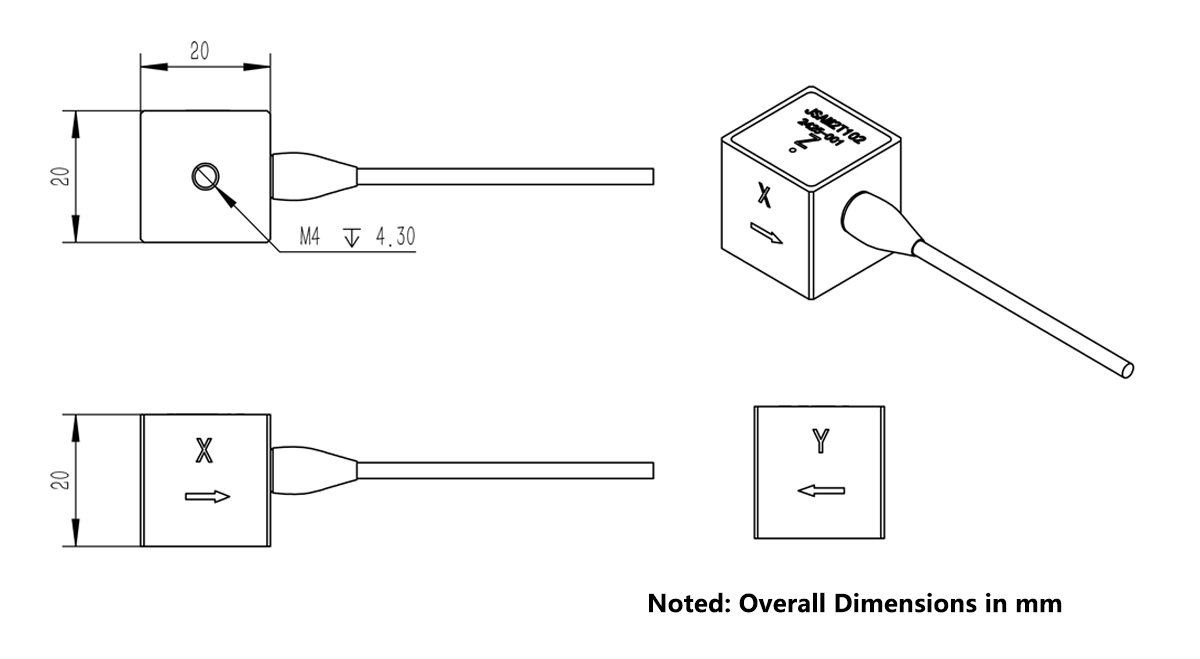
Product Dimensions
Product Electrical Interface
Wiring color
Red
Black/blue
Green
Yellow
White
Wiring Definition
Power positive
Power ground*
X-axis output
Y-axis output
Z-axis output
* Note: Reference ground for signal measurement
Performance Specifications
The JSAM2T0 sensor is a triaxial acceleration measurement sensor. Its key performance specifications are listed as below.
Unless otherwise specified, all testing was conducted under the following conditions: 12 VDC, 25°C, 50% R.H., and 1 standard atmosphere.
Automotive safety system development Industrial machinery condition monitoring Biomedical equipment and research Consumer electronics motion sensing Structural tilt and inclination measurement
The Triaxial MEMS Accelerometer is providing a flexible range selection feature to suit particular measurement needs. The ±2g model is characterized by a very high sensitivity (1000 mV/g) and, therefore, it is suitable for detecting very small vibrations and precise tilt; while the ±30g edition is able to withstand heavy shocks very well without signal saturation. Also, the DC Response Accelerometer gives you the chance to perform gravity-referenced measurements and dynamic vibration analysis simultaneously.
JSAM2T1, with all the performance features, heavy-duty casing, and application versatility, is setting the standard of Industrial Vibration Monitors. With the JSAM2T1, you are assured of the precision, strong build, and unparalleled level of technical features of the Triaxial MEMS Accelerometer. It is rightly the smart choice for the engineers and researchers who are looking forward to a dependable and accurate motion measurement in a variety of industrial and research applications.
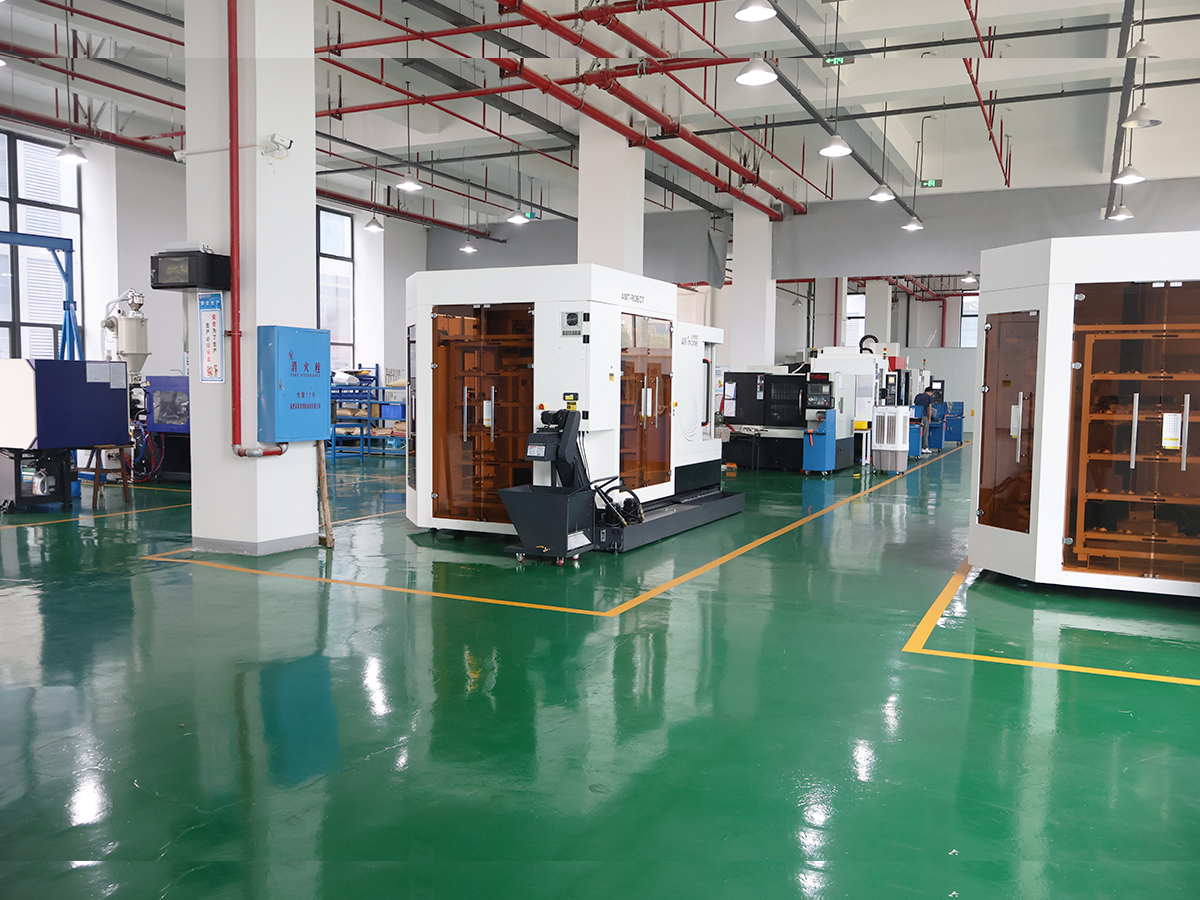
Factory building scale
Factory building scale
As the core carrier of the company’s product manufacturing, the Factory Production Base is located in Changsha, Hunan, covering an area of over 3,000 square meters of standardized workshops. It integrates key links such as component processing, finished product assembly, and semi-finished product storage, forming a streamlined and efficient production chain.
FAQ
1. Q: This sensor measures down to 0 Hz. What does this mean for my application, and how is it different from typical AC-coupled accelerometers?
A: A 0 Hz (DC) response means the sensor can measure constant (static) acceleration forces, such as the force of gravity. This enables it to be used for tilt sensing and inclination measurement, as tilting the sensor changes the component of gravity on its axes. Typical AC-coupled vibration sensors cannot do this, as they are designed only for dynamic (changing) acceleration and would filter out a constant signal. This makes the JSAM2T1 versatile for both dynamic vibration analysis and static orientation sensing.
2. Q: The sensitivity range really varies between different models (for example, 1000 mV/g vs. 66.7 mV/g). What factors should I consider when picking the appropriate sensitivity and range levels? A: It is a fine balance to decide the range and sensitivity: Low-g models (e.g., ±2g, 1000 mV/g): You should use these if the vibrations are hardly detectable or if you want a very accurate tilt measurement. The large output signal of the sensor (1000 mV per g) results in high resolution and a very good signal-to-noise ratio for measuring small accelerations. High-g models (e.g., ±30g, 66.7 mV/g): These are your picks when dealing with shocks and mashing up strong vibrations. The output per g is lower, but the augmented range means that in the case of intense shock, the sensor’s output will not saturate (“clip”) and therefore there will be no loss of data.
Here's the simple rule -pick the smallest range that still allows the measurement of the highest acceleration you will be dealing with. 3. Q: Why does the datasheet emphasize the "Transverse Sensitivity" of ≤5.0%, and what sensor design features help keep this value low? A: Transverse sensitivity is a sensor characteristic describing how much the sensor will mistakenly give you an output due to the acceleration component that is perpendicular to its sensing direction. The smaller the value (≤5% means very good), the more the output for each axis corresponds to the real one. The JSAM2T1's accuracy of cutting and manufacturing methods ensures that the internal sensing components are perfectly aligned with the stainless steel housing. This sturdy build reduces angular displacements and crosstalk, which results in very low transverse sensitivity, an essential factor for dependable 3D motion vector analysis. 4. Q: What effect does the quoted "Noise Spectral Density" (e.g., 35 μg/√Hz) have on the smallest vibration measurement capability? A: Noise Spectral Density is a measure of the device noise at the output spectrum, which is the ultimate sensitivity threshold that the sensor enables. It is the reference level of the sensor's intrinsic noise. An instrument with a figure like 35 μg/√Hz (for the ±2g model) will have a resolution of a signal that is very close to the noise of the sensor itself, enabling it to detect changes in vibration that are too small to be detected by less sensitive equipment. It lays a great foundation for next steps, such as early-stage bearing fault detection or monitoring of subtle structural vibrations. Higher noise density in the models of the wider range is a normal sacrifice for the presence of higher dynamic range ability. 5. Q: This sensor can be powered with a wide voltage range (+10 to +30 VDC). What is the benefit of this, and what should the combination of "Power Negative" and signal ground be understood from the pinout? A: Having a wide voltage range makes the device extremely adaptable: It guarantees operation with a wide variety of different industrial power supplies, including the ones that can be very noisy or voltage fluctuating. It also gives you the possibility to cable up very long distances without worrying too much about the voltage drop point. As for the connection, Black/Blue line is the Power Negative return. Also, the attached note clarifies that this very line acts as the reference/common ground to all three signal outputs (X, Y, Z). This is the most common setup for 3-wire sensors (Power, Ground, Signal). You have to ensure that this ground line is connected to your data acquisition system ground to provide a proper reference level for the analog outputs.
TFC was founded in 2015, with its headquarters located in Changsha, Hunan. It has a standardized workshop of over 6,000 square meters and takes "Making every connection more reliable, making every piece of data more accurate" as its guiding principle, dedicated to providing customers with high-performance component products and solutions. The company has three business divisions: Instrumentation, Connectors, and Sensors. It is a national high-tech enterprise integrating R&D, production, testing, and sales, covering technologies such as signal connection technology, signal conditioning technology, signal switching technology, and signal detection technology.
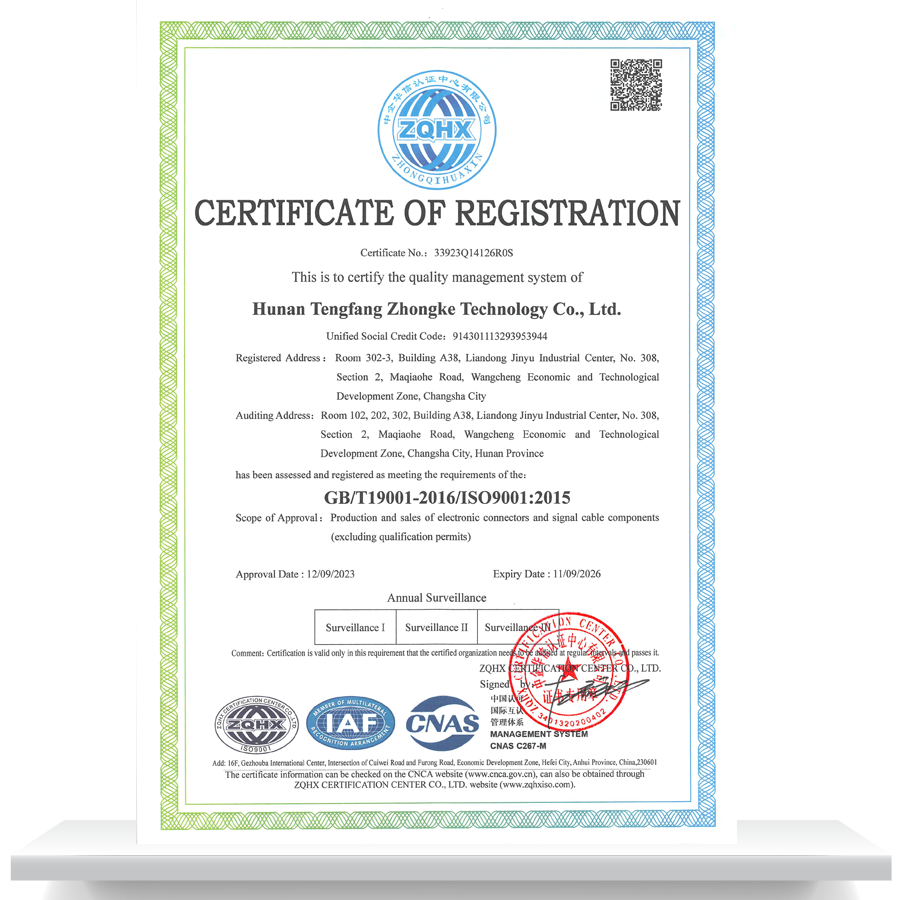
TFC has obtained National Standard (GB) Quality Management System Certification and Weapon Equipment (GJB) Quality System Certification. It has also established an independent and complete internal quality testing system. All products undergo strict full-process testing in accordance with national standards (GB) and weapon equipment standards (GJB) to ensure compliance and stability of performance.