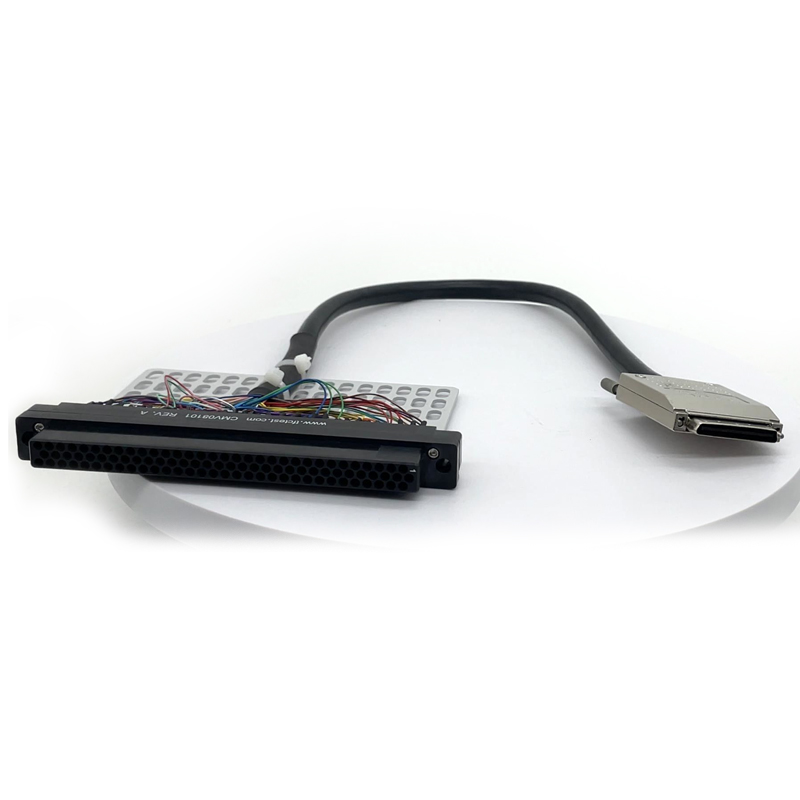
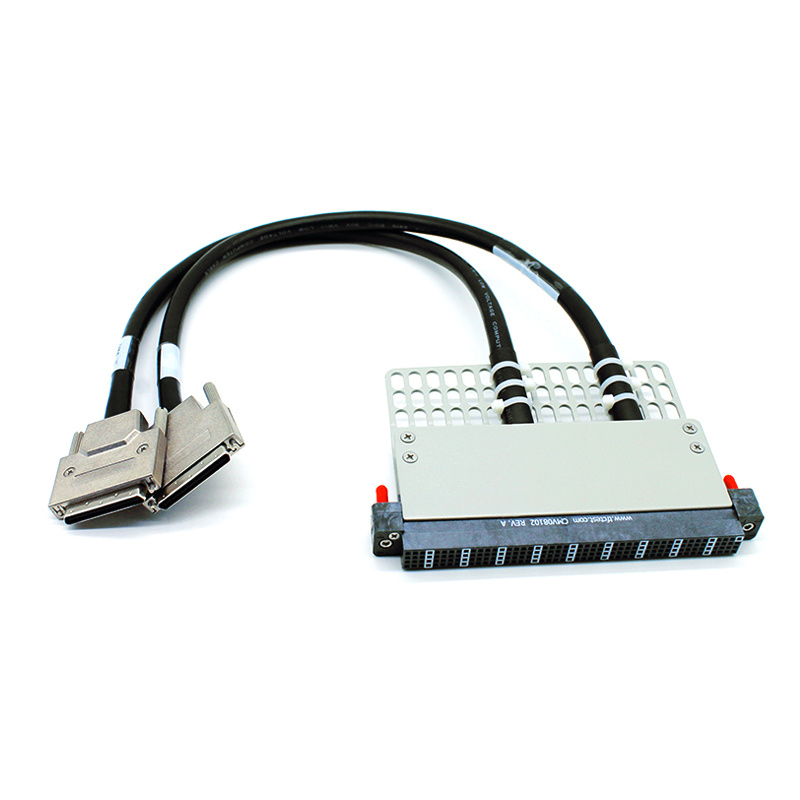
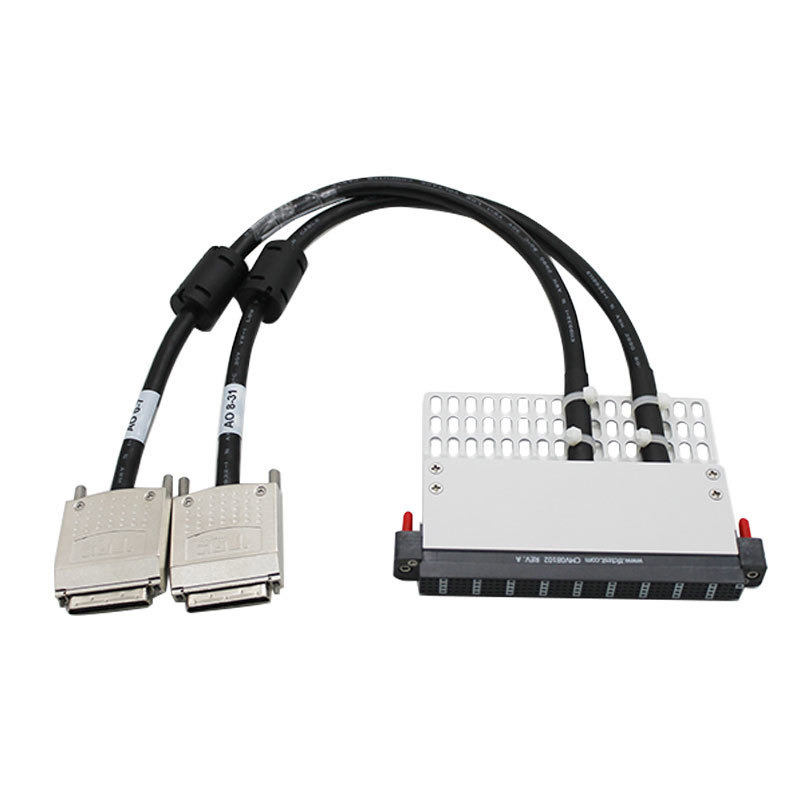
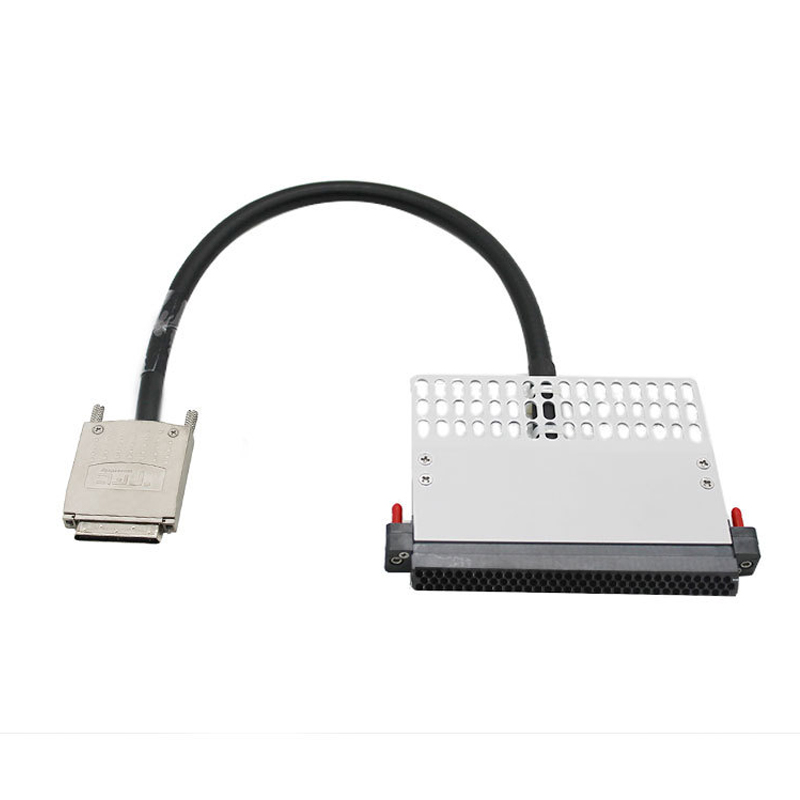
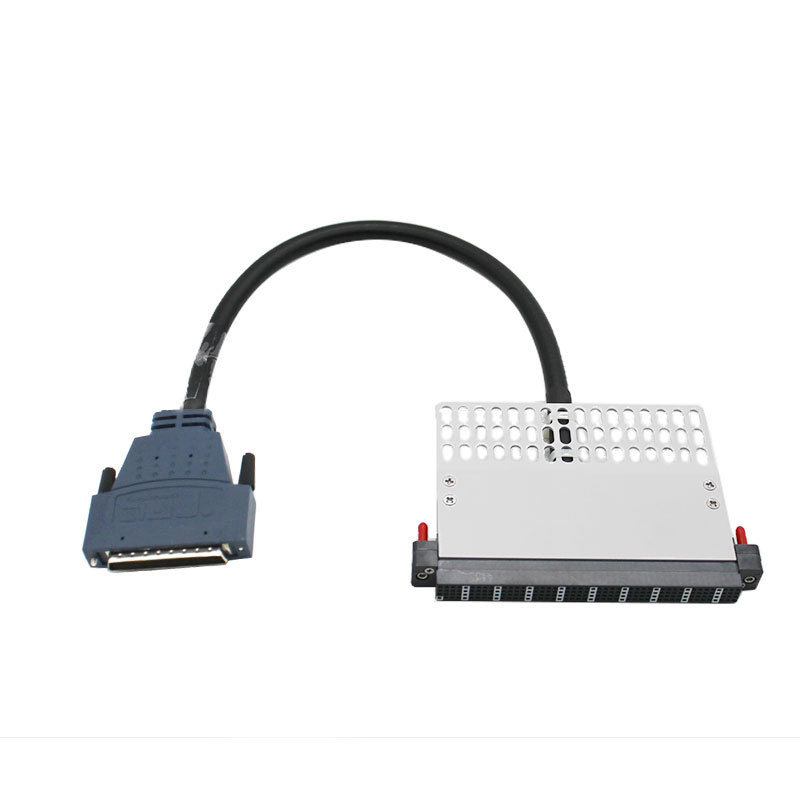
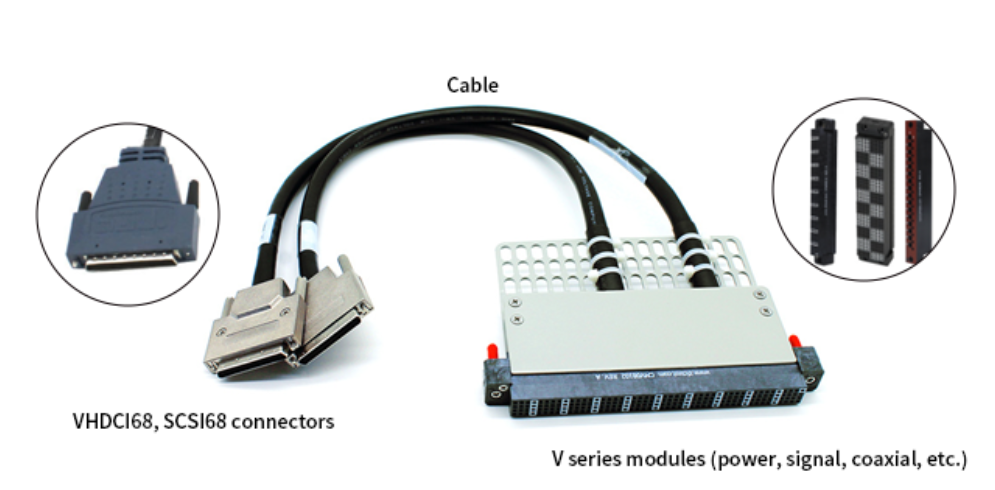
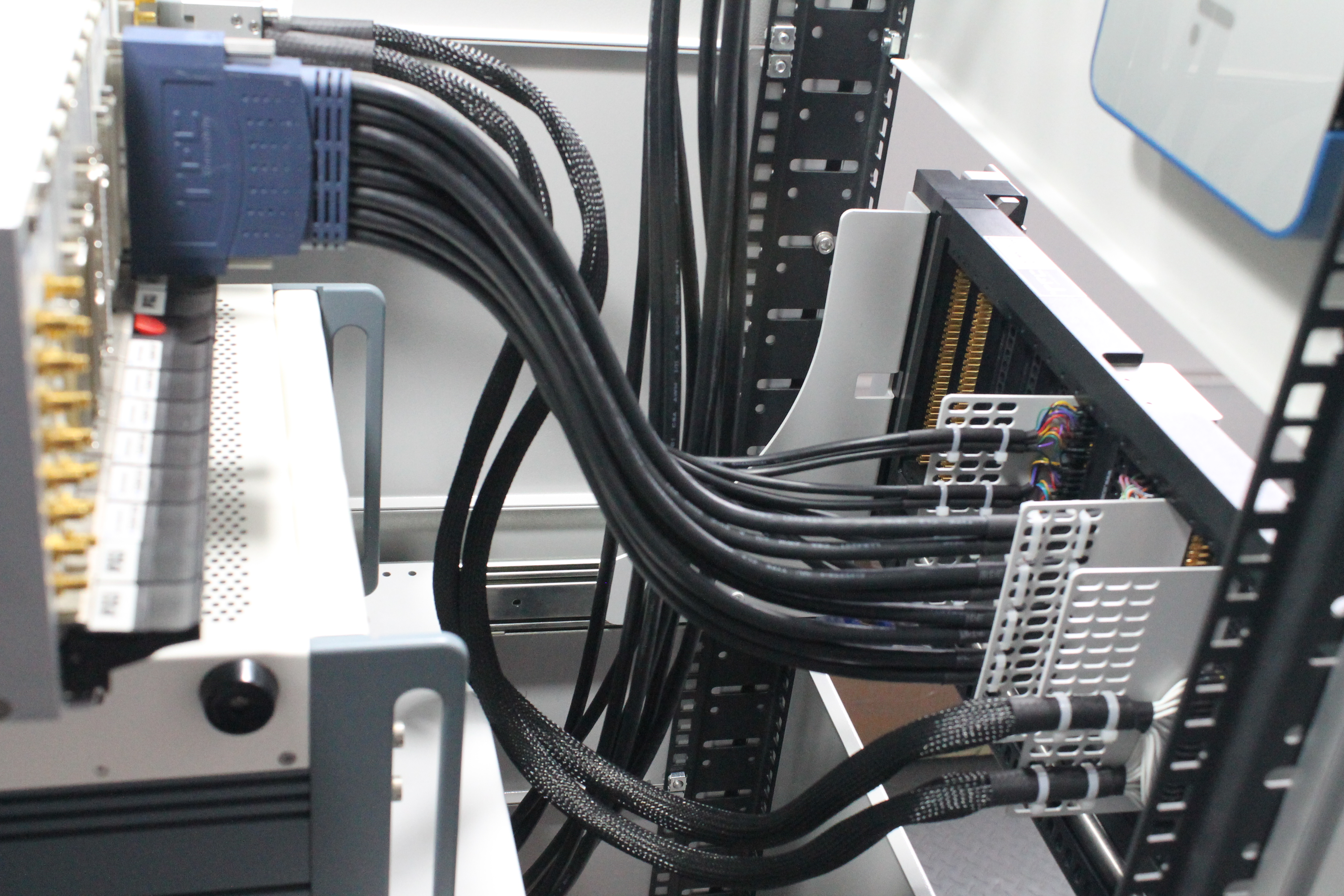
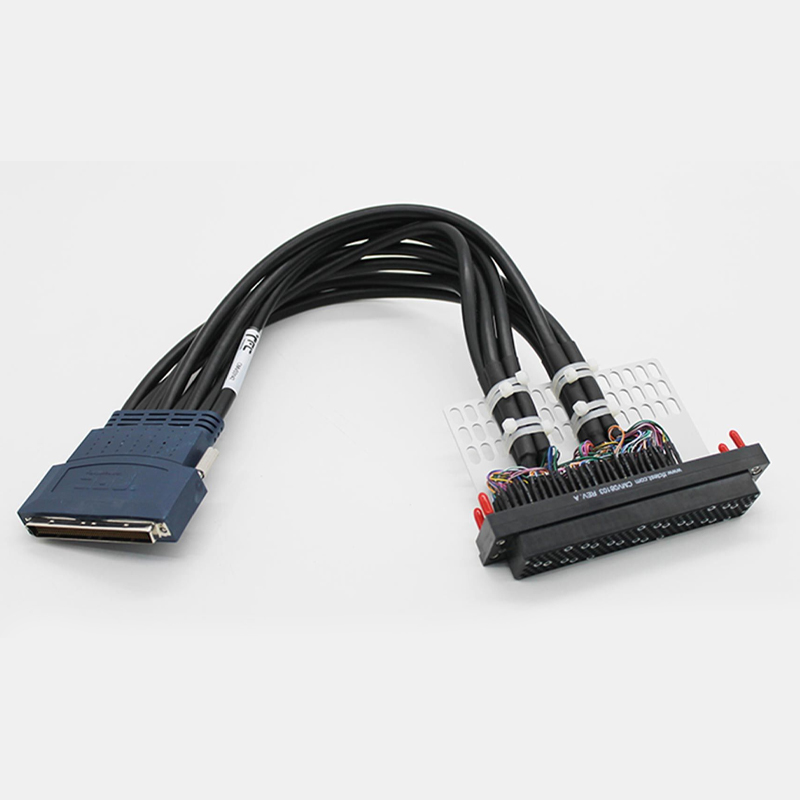
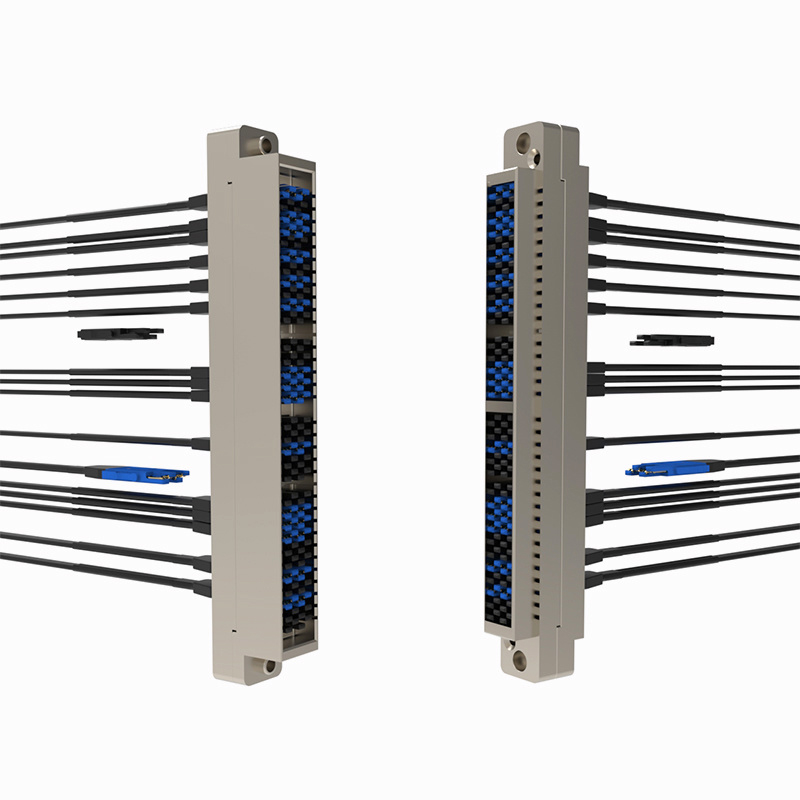
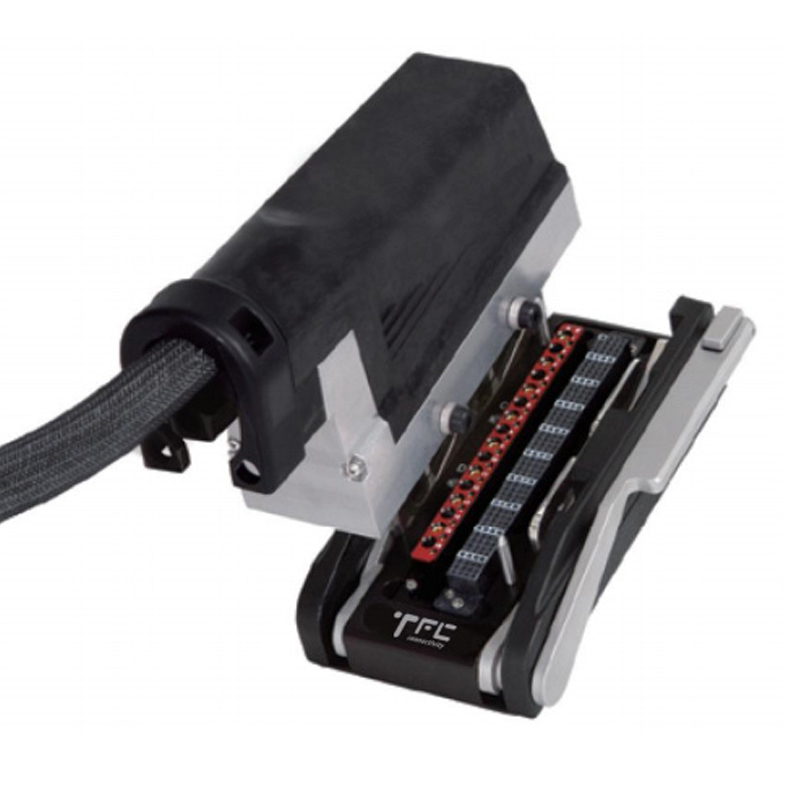
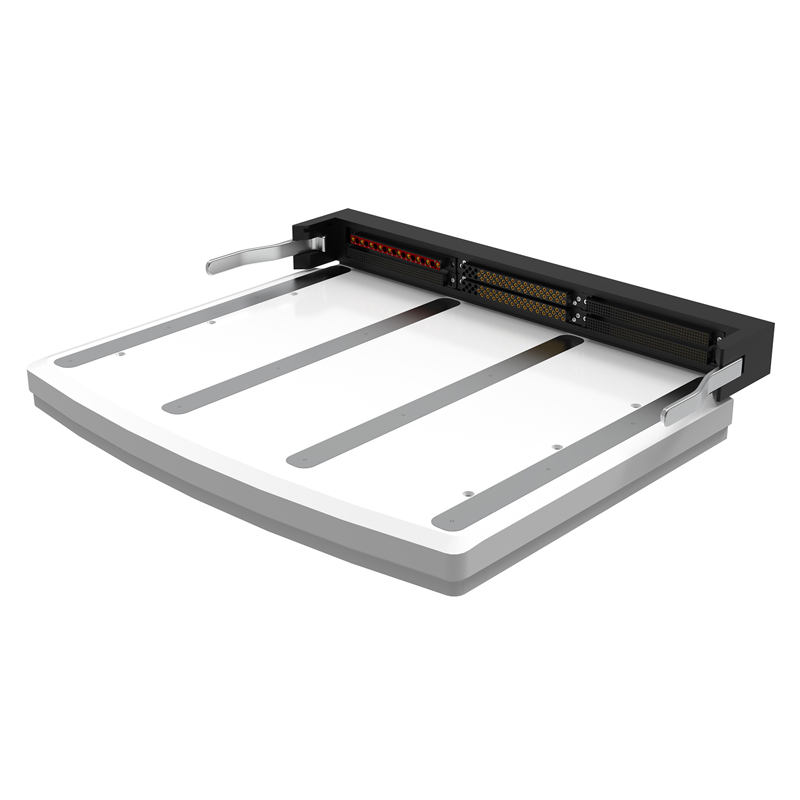
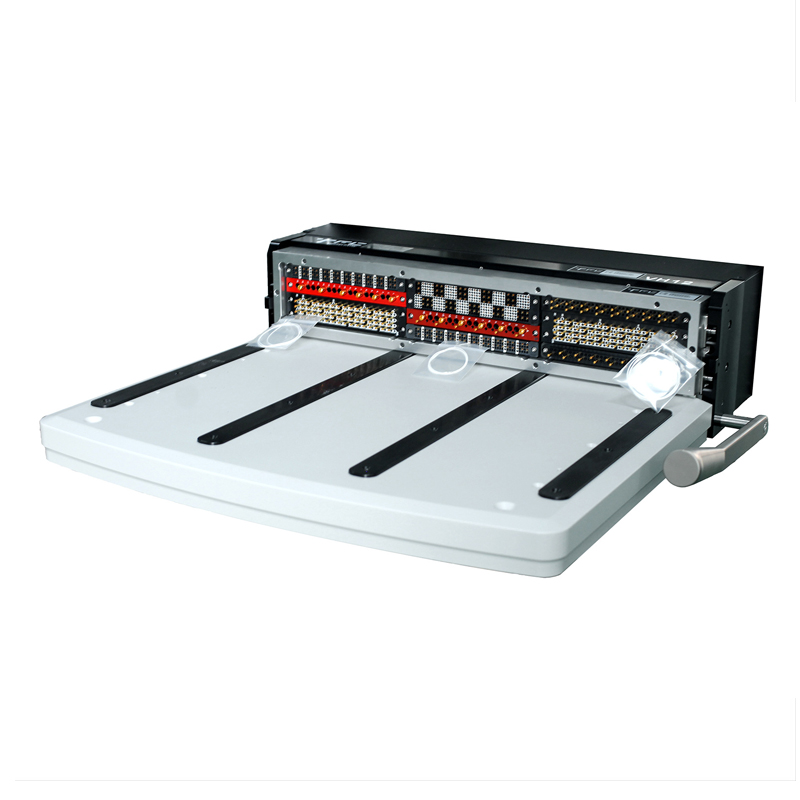
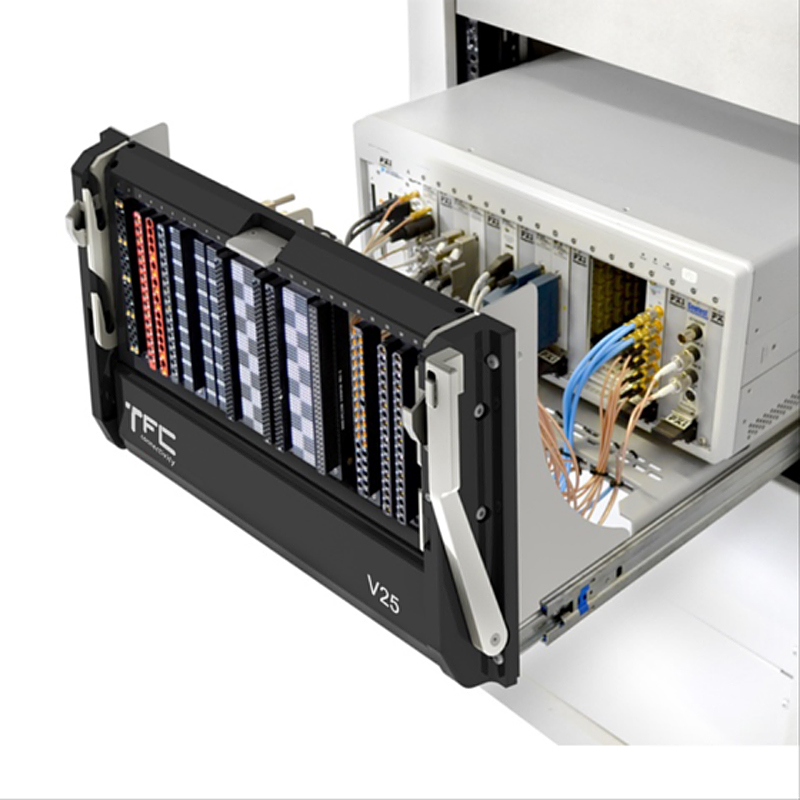
TFC offers excellent PXI-compatible cable assemblies which can be used for ICA/ Qua/ TRI/ coaxial modules. The wiring harness assembly can be customized to anyone's requirement. The options include 68-pin connectors such as VHDCI68 and SCSI68, as well as SMB connectors that are suitable for digital /RF mixed-signal test systems. Such a board card assembly has become the standard modular components at TFC. Cable assembly specifications: Operating voltage 30V, standard length 0.5m, contacts are gold-plated (copper/beryllium copper), low resistance (≤35mΩ/≤25mΩ), "mass interconnection" type.
The product structure composition of the board card assembly
The main motherboard assembly consists of a 68-pin connector (the part which is connected to PXI test instrument motherboard card resource) and a TFC massive interconnection V series module (universal test panel), with cables in the middle to form a wiring harness assembly. Suitable connectors and module connection points for can be customized all by the customer. This modular component is proficient in substantially reducing the time of engineers working on test systems and thereby saving human resources also.
TFC PXI Cable Assemblies: High-Density, Reliable Connectivity Solutions for Test & Measurement Systems
The CMV series cable assemblies by TFC are suitable for PXI (PCI eXtensions for Instrumentation) test environments and meet PCIE 3.0 standards. These cable assemblies offer reliable, performance-efficient connectivity between ICA (Interconnect Adapter) modules and necessary test instruments. In sectors like aerospace, automotive electronics, and industrial automation, these cables are basically solving the problems of "high-density interconnection" and "signal integrity"- which are two of the most significant issues for precise data transmission in complex test setups. So, here listing of components model, shared technical advantages, application scenarios, and selection guidance to help you find the best solution for your system.
Features and advantages
The cable assembly is a brand new system that perfectly fits the core concept of "reliability, compatibility, and scene adaptability" in the PXI test environment:
1. Strong compatibility: The cable assembles can be used with any type of PXI ecosystem board, thus, the company will be able to save the cost of integration.
2. Scenario flexibility: The cable assembly has the ability to fulfill different testing requirements, therefore, the users will face less complexity of the selection process.
3. Full-process quality assurance: Besides the 2-year warranty which we give to the cable assembly, we also offer the 2D technical drawings (for the chassis wiring planning) and a compatibility list (showing the compatible PXI equipment models in a clear way) that are very helpful for the integration process and the next maintenance stage user.
4. Standardized design: The main idea throughout the system is "massive interconnection" which is the keyword. The modular structure enables fast changes of the defective cables, thus, the downtime of the test system is kept at a minimum (for example, cable replacement can be done within 10 minutes when a production line is out of order).
5. Customized support: The batch customization of non-standard lengths (e.g., 1m, 2m) is supported to meet the changes of the special chassis layout and, thus, users are free from the task of cutting the cables by themselves (which lowers the risk of signal loss).
FAQ
Q1: Where are 6-pin cable assemblies mainly applied?
A1: In the process of creating a universal test system for a huge interconnection, it is used as a connection bridge for the test system, thus solving the problem of connecting different interfaces (such as SMB, VHDCI68, SCSI68) and the specially designed test modules of the TFC universal interface.
Q2: Are there any restrictions on the corresponding points and cable lengths for the product?
A2: The location of points and the line sequence of the cable can be changed according to the customer's requirements, and the length of the cable can also be determined by the customer.
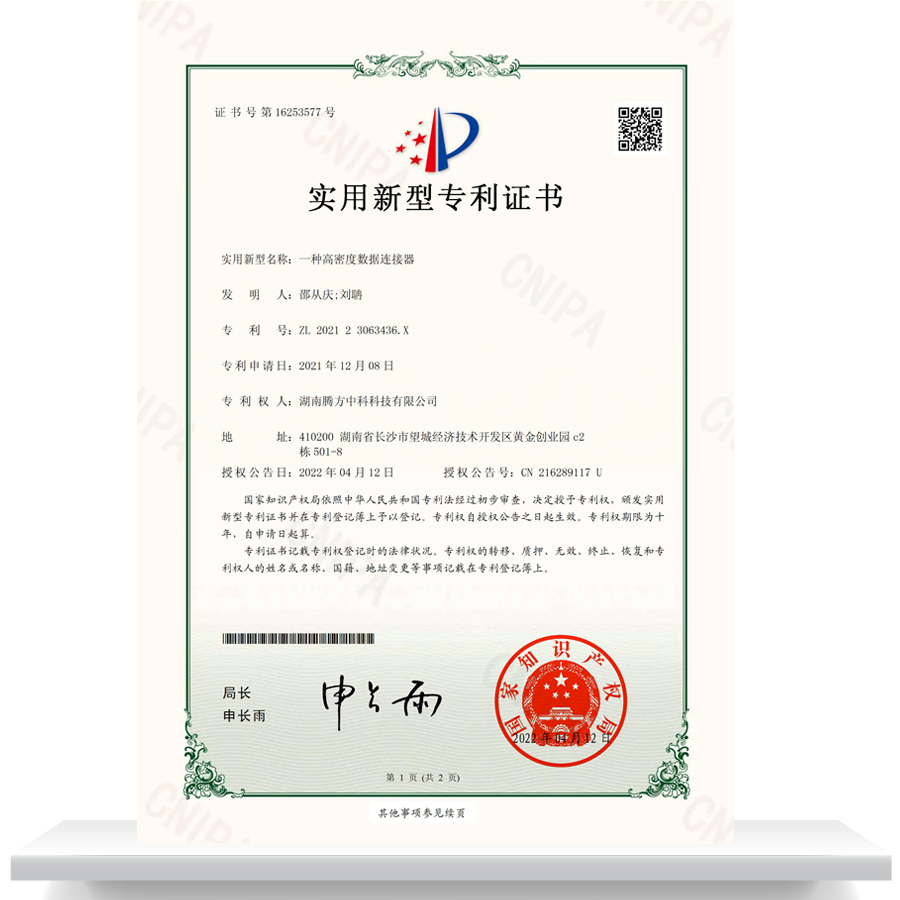
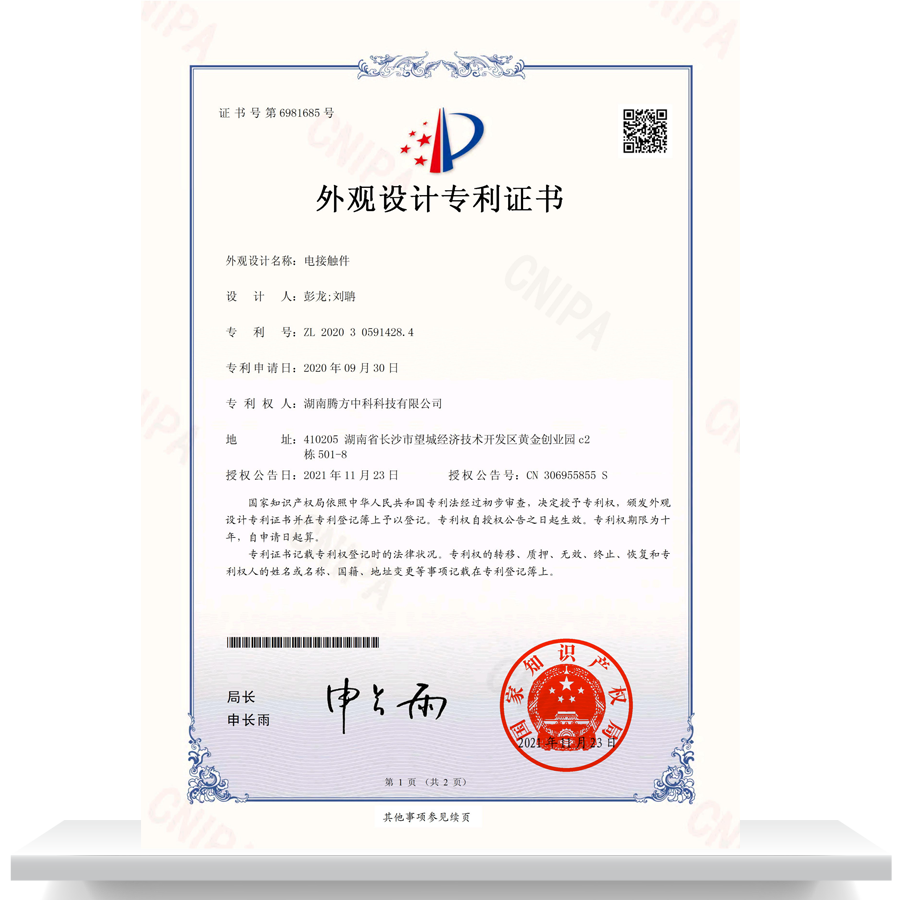
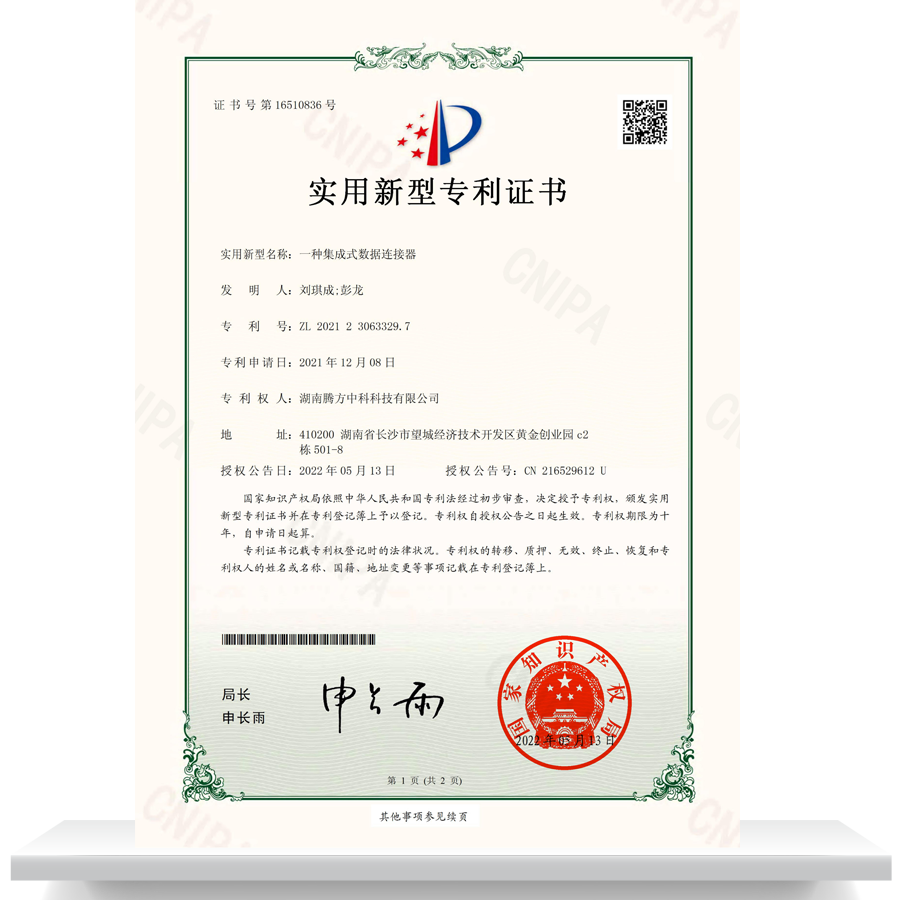
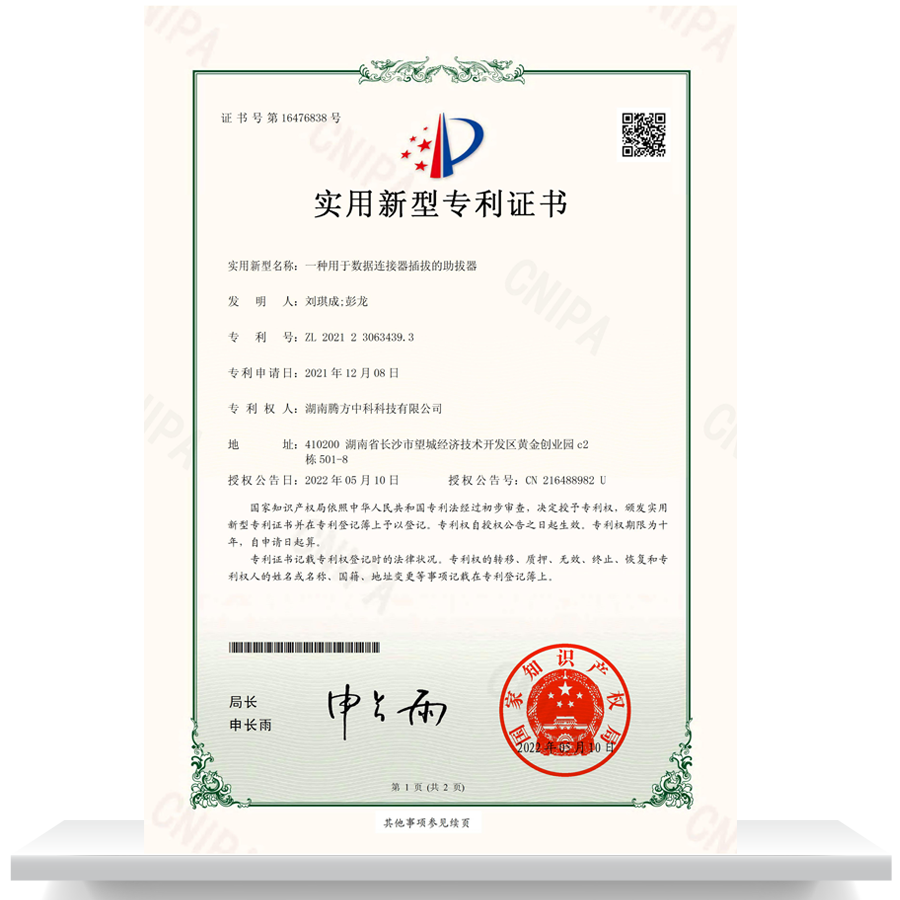
TFC was founded in 2015, with its headquarters located in Changsha, Hunan. It has a standardized workshop of over 6,000 square meters and takes "Making every connection more reliable, making every piece of data more accurate" as its guiding principle, dedicated to providing customers with high-performance component products and solutions. The company has three business divisions: Instrumentation, Connectors, and Sensors. It is a national high-tech enterprise integrating R&D, production, testing, and sales, covering technologies such as signal connection technology, signal conditioning technology, signal switching technology, and signal detection technology.
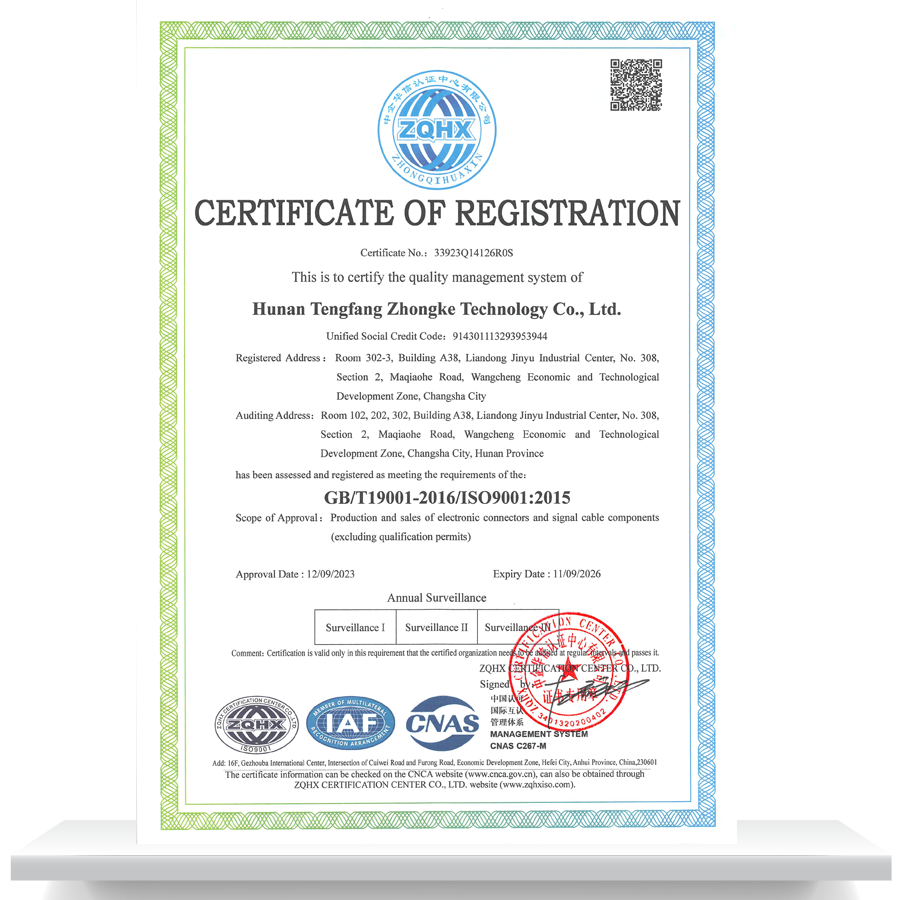
TFC has obtained National Standard (GB) Quality Management System Certification and Weapon Equipment (GJB) Quality System Certification. It has also established an independent and complete internal quality testing system. All products undergo strict full-process testing in accordance with national standards (GB) and weapon equipment standards (GJB) to ensure compliance and stability of performance.