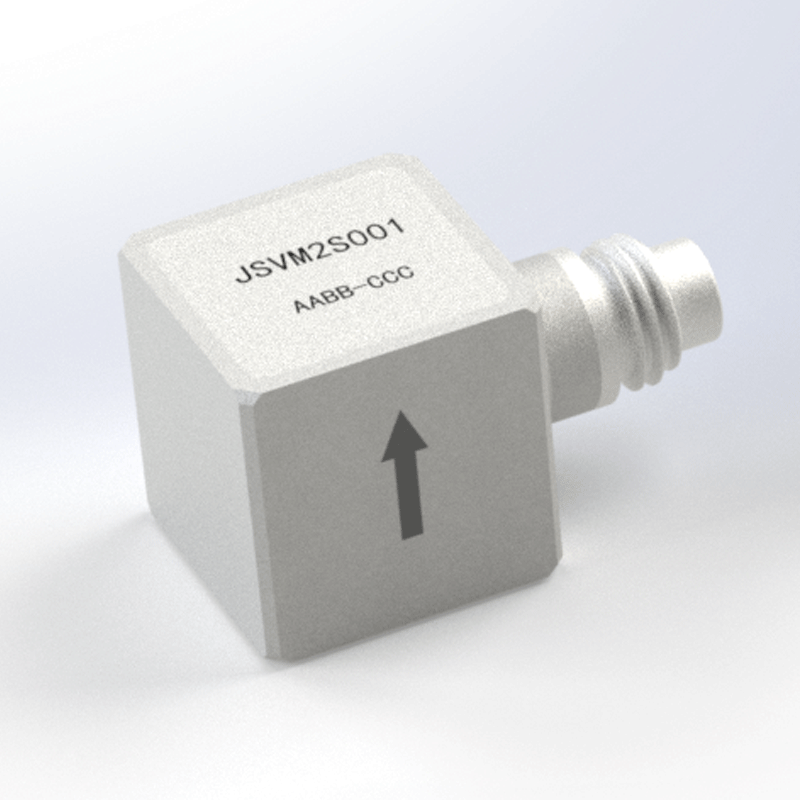
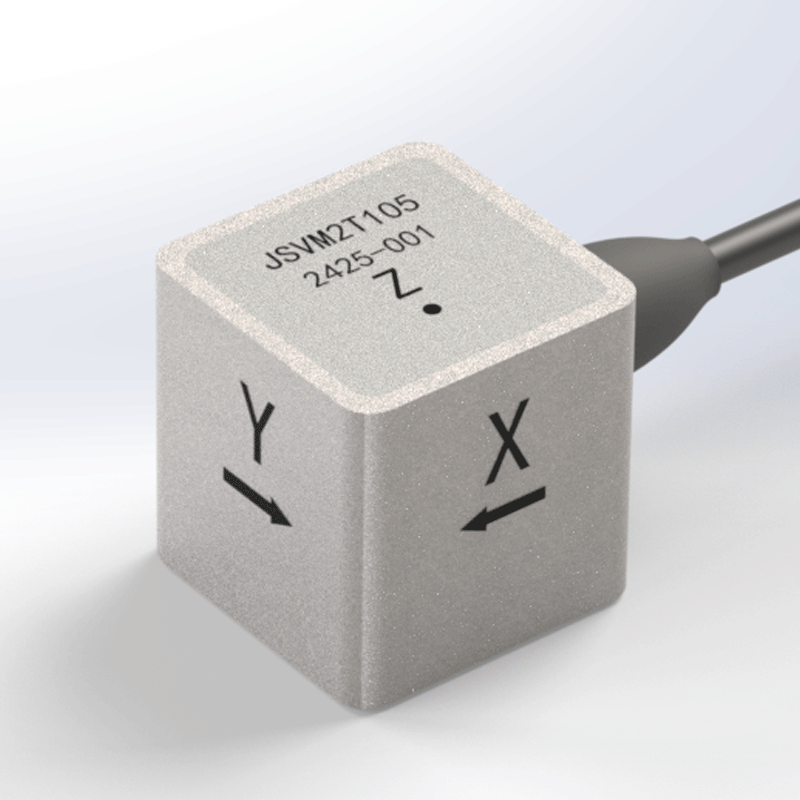
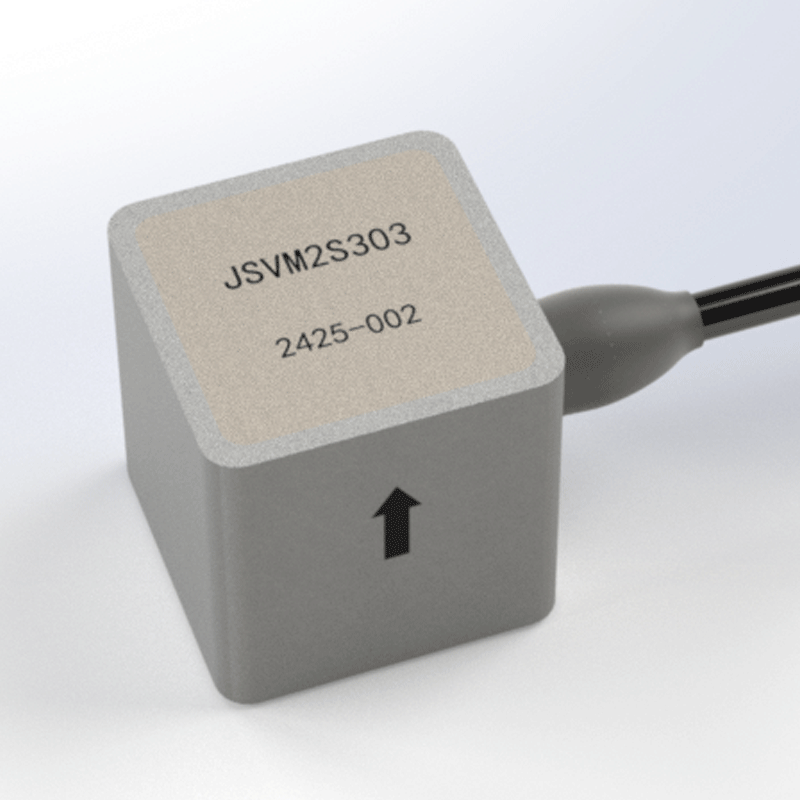
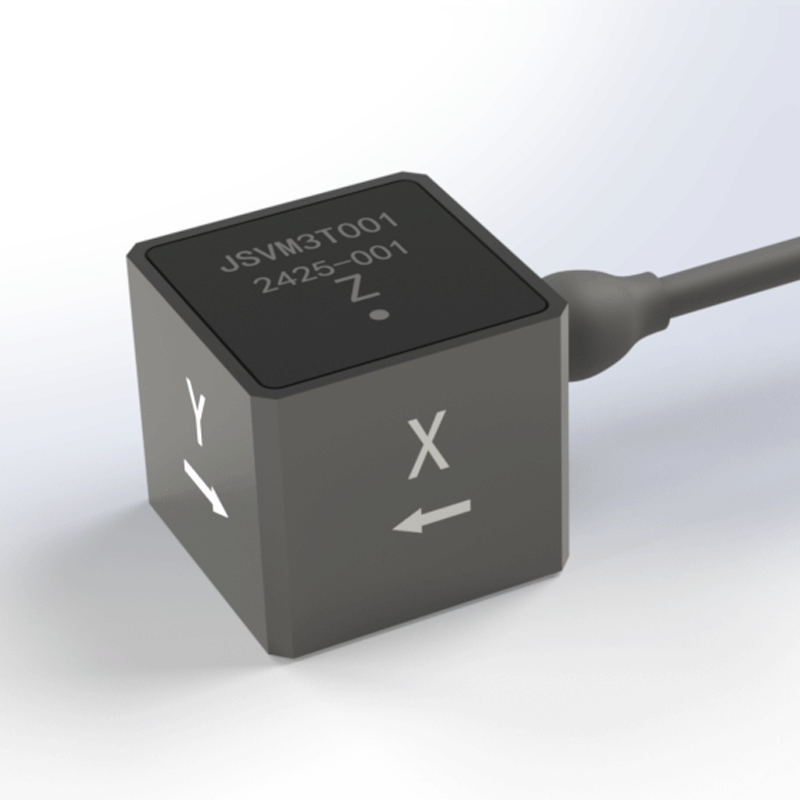
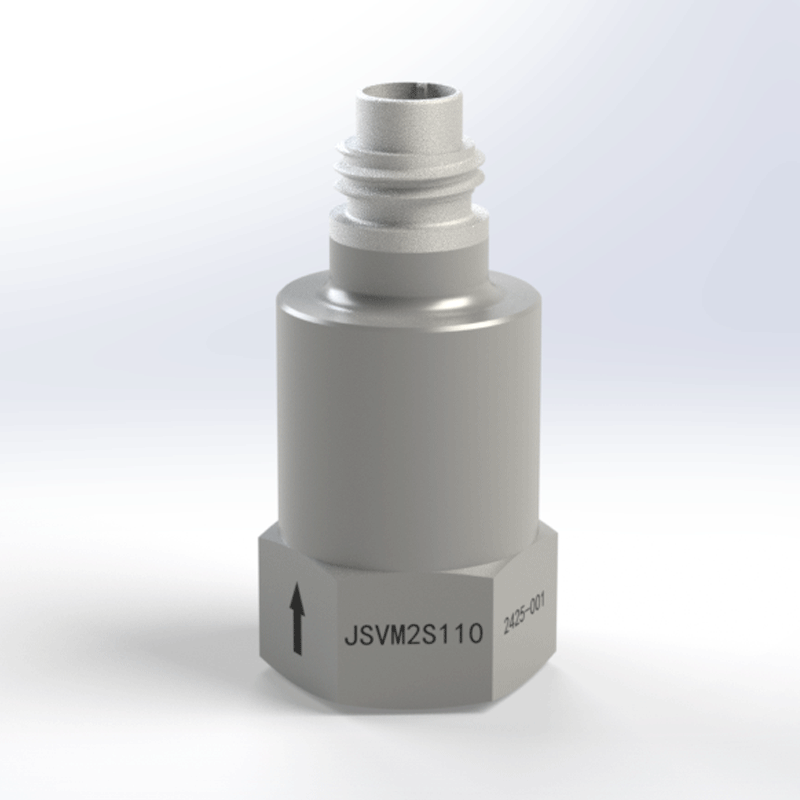
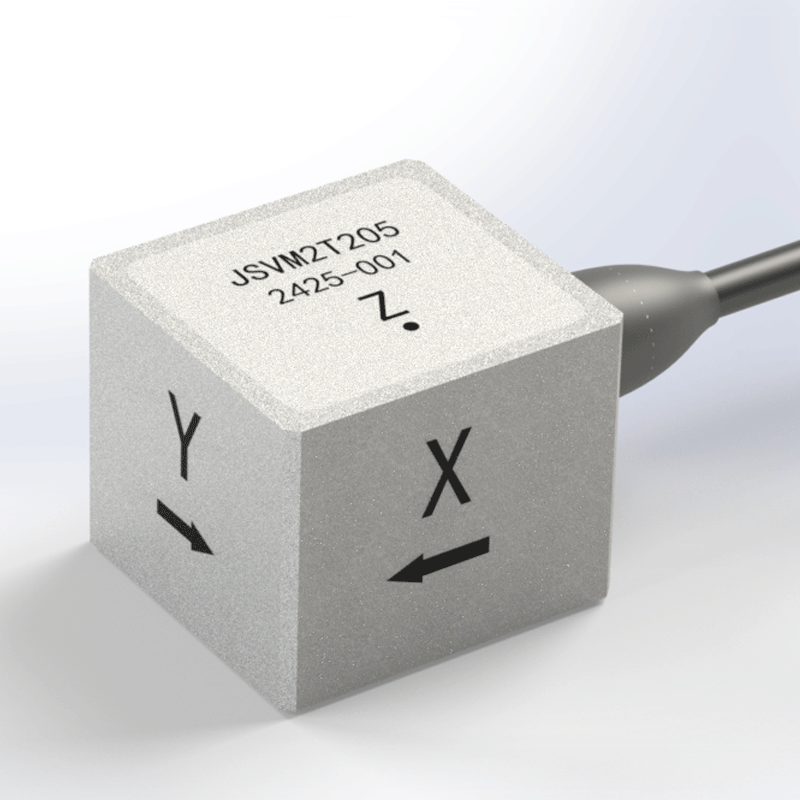
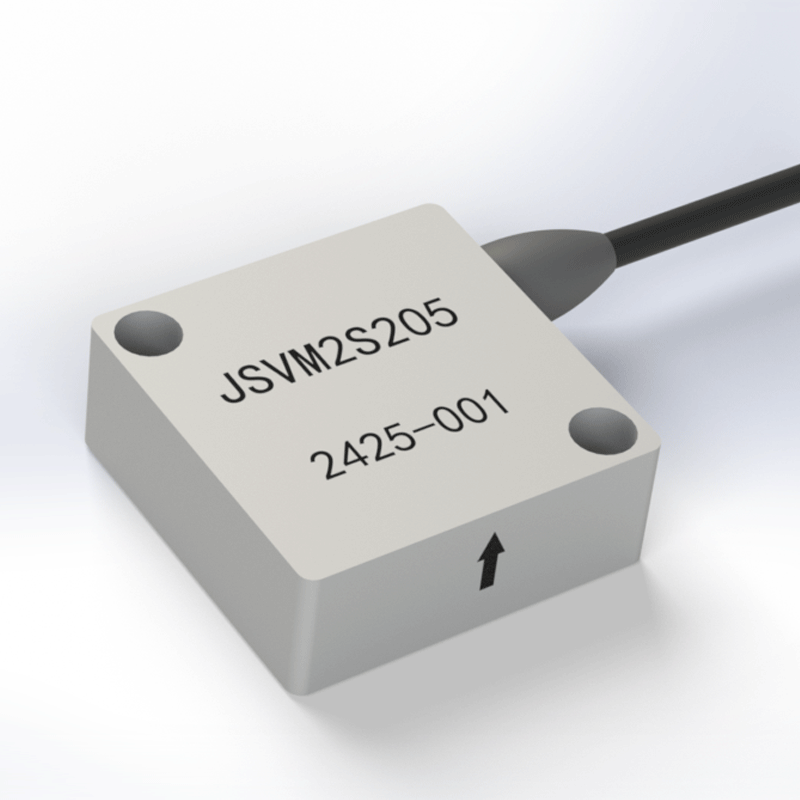
MEMS Single Axis Vibration Sensor With MIL DTL 5015 Connector
JSVM2S0
MEMS Vibration Sensor
Range±10g,±30g,±50g,±100g,±200,±500
• The outside is made of 304 stainless steel
• Very low power consumption: during operation, only 2 mA of current
• Very high shock-resistance capability: 10,000g in any direction
• Broad selectable measurement range: ±10g to ±500g
• The device is based on MEMS variable capacitance technology
• Small and light: 15g
JSVM2S0 Vibration Sensor is a device that employs MEMS variable capacitance sensing technology. It can measure acceleration in an ultra-wide frequency range from 0 Hz to 10,000 Hz. The unit features a precision-machined 304 stainless steel monolithic structure with an internally 3D-packaged sensing element, thus ensuring strong bonds and, therefore, greatly improved performance in frequency response and transverse sensitivity. A structure like that not only assures stability and reliability over time but also turns the device into a tool suitable for even the most extreme operating environments. The sensor is the ideal instrument for safety testing in the automotive industry, aerospace, and the like.
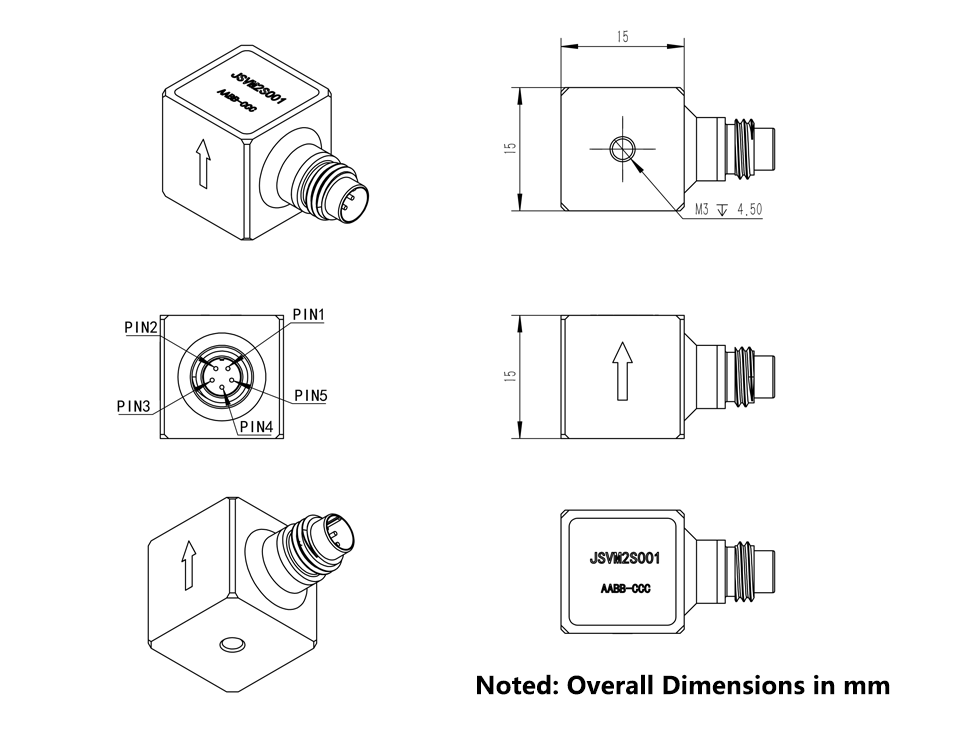
Product Dimensions
Product Electrical Interface
Wiring color
Red
Black
Green
Yellow
White
Wiring Definition
Power positive
Power ground*
X-axis output
--
--
* Note: Reference ground for signal measurement
Performance Specifications
The JSVM2S0sensor is a uniaxial vibration measurement vibration sensor. Its key performance specifications are listed as below.
Unless otherwise specified, all testing was conducted under the following conditions: 12 VDC, 25°C, 50% R.H., and one standard atmosphere.
1. Q: The sensor has a fantastic frequency response from 0 Hz (DC) to 10,000 Hz. What are the real-world benefits of such an ultra-wide bandwidth?
A: Such a wide bandwidth turns the JSVM2S0 into a very flexible instrument that can be used for a large variety of condition monitoring and analysis tasks:
0 Hz (DC Response): It enables static acceleration measurement; for instance, one can measure constant tilt or inclination, which is very helpful in alignment and orientation checks.
Low to Mid Frequencies (1-1000 Hz): These frequencies are suitable for the condition monitoring of standard machine components, such as imbalance, misalignment, and bearing faults in their initial stages.
High Frequencies (1000-10,000 Hz): they are required to locate high-frequency phenomena like gear tooth meshing faults, acoustic emissions, and very early-stage bearing degradation that show up as high-frequency vibrations or stress waves.
2. Q: With a typical current consumption of only 2mA, what are the advantages for real-world applications?
A: One of the major advantages of the extremely low power consumption is that it can be used for:
Battery-Powered Systems: Providing long-term, remote monitoring in situations where power availability is limited or where it is difficult to run cables, e.g., on mobile machines, remote infrastructures, or wireless sensor networks.
Intrinsically Safe (IS) Designs: In this case, the low power feature is one of the main requirements for the design of sensors that can be certified for use in hazardous environments, where there might be explosive gases or dust.
Multi-Channel Systems: It permits a large number of sensors to be linked to a single data acquisition system without the power supply being overloaded.
3. Q: The sensor provides several mounting options (Magnetic, Adhesive, Screw). How does the mounting method influence the high-frequency performance?
A: The way in which the sensor is mounted has a direct influence on the instrument's high-frequency response. A more rigid connection will allow the high-frequency capability to be maintained.
Screw Mounting (M5): It is the best method for obtaining the full 10 kHz bandwidth. It offers the most substantial mechanical link, thus allowing the high-frequency signal to be transmitted without loss.
Magnetic Mount: It is a good solution when the measurement is only for a short period of time, but it generates a mechanical low-pass filter, which can considerably reduce the strength of the signals over 1-2 kHz, depending on the magnet and surface, because it attenuates.
Adhesive Mount: The effectiveness of the performance depends on the adhesive; special cyanoacrylate adhesives can provide good high-frequency response, but usually, they are less reliable and repeatable than a screw mount for permanent installations.
4. Q: The noise density is given as low as 35 μg/√Hz. Why is this significant for machinery health monitoring?
A: Noise density refers to the resolution of the sensor - its ability to pick up extremely small vibration signals.
Such a low noise floor as 35 μg/√Hz implies the device will be capable of finding incipient faults (e.g., a tiny bearing defect), the vibration signature of which is very weak and thereby would get buried in the noise of a less sensitive sensor.
This very high resolution is what makes predictive maintenance (PdM) programs possible, which are aimed at detecting problems at the earliest stage and therefore providing the opportunity for planned interventions and preventing sudden failures. The higher noise level in the ±500g variant is a typical compromise for its extended measurement range.
TFC was founded in 2015, with its headquarters located in Changsha, Hunan. It has a standardized workshop of over 6,000 square meters and takes "Making every connection more reliable, making every piece of data more accurate" as its guiding principle, dedicated to providing customers with high-performance component products and solutions. The company has three business divisions: Instrumentation, Connectors, and Sensors. It is a national high-tech enterprise integrating R&D, production, testing, and sales, covering technologies such as signal connection technology, signal conditioning technology, signal switching technology, and signal detection technology.
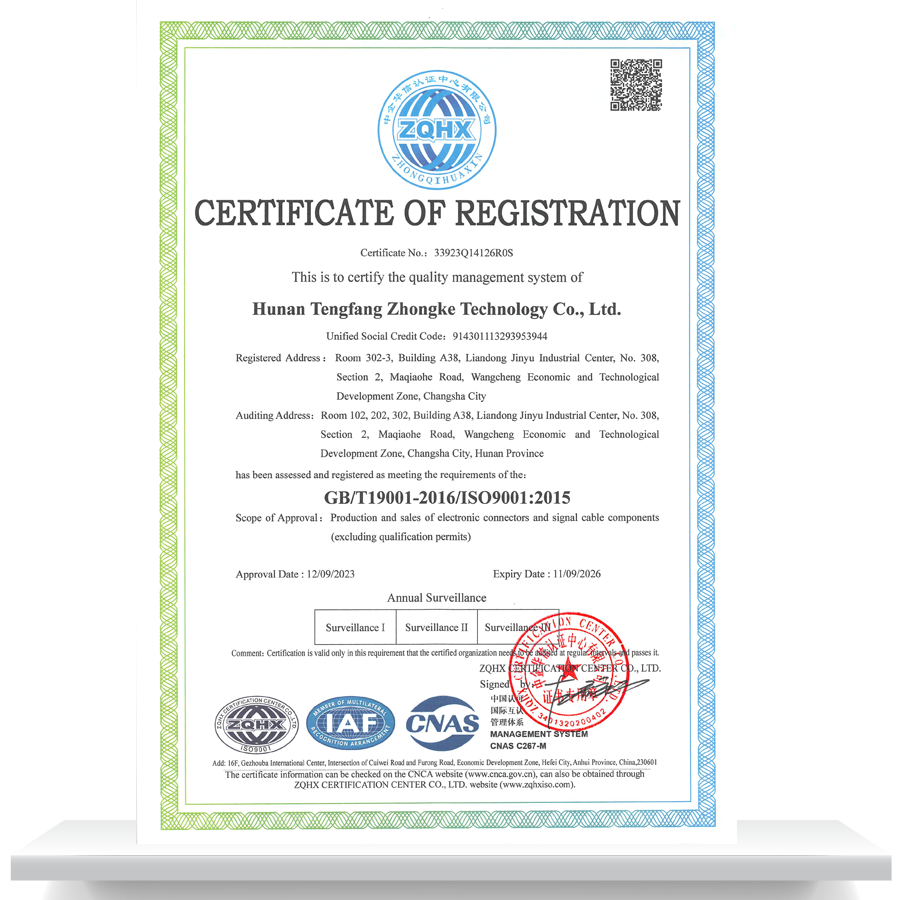
TFC has obtained National Standard (GB) Quality Management System Certification and Weapon Equipment (GJB) Quality System Certification. It has also established an independent and complete internal quality testing system. All products undergo strict full-process testing in accordance with national standards (GB) and weapon equipment standards (GJB) to ensure compliance and stability of performance.